frybread
Preparation Time: 15 minutes
Cooking Time: 15-20 minutes
Total Time: 30-35 minutes
Serving Size: 6–8 pieces
Difficulty: ★☆☆☆☆ (Easy)
Intensity: Low – Beginner friendly
Cuisine: Indigenous North American
Introduction
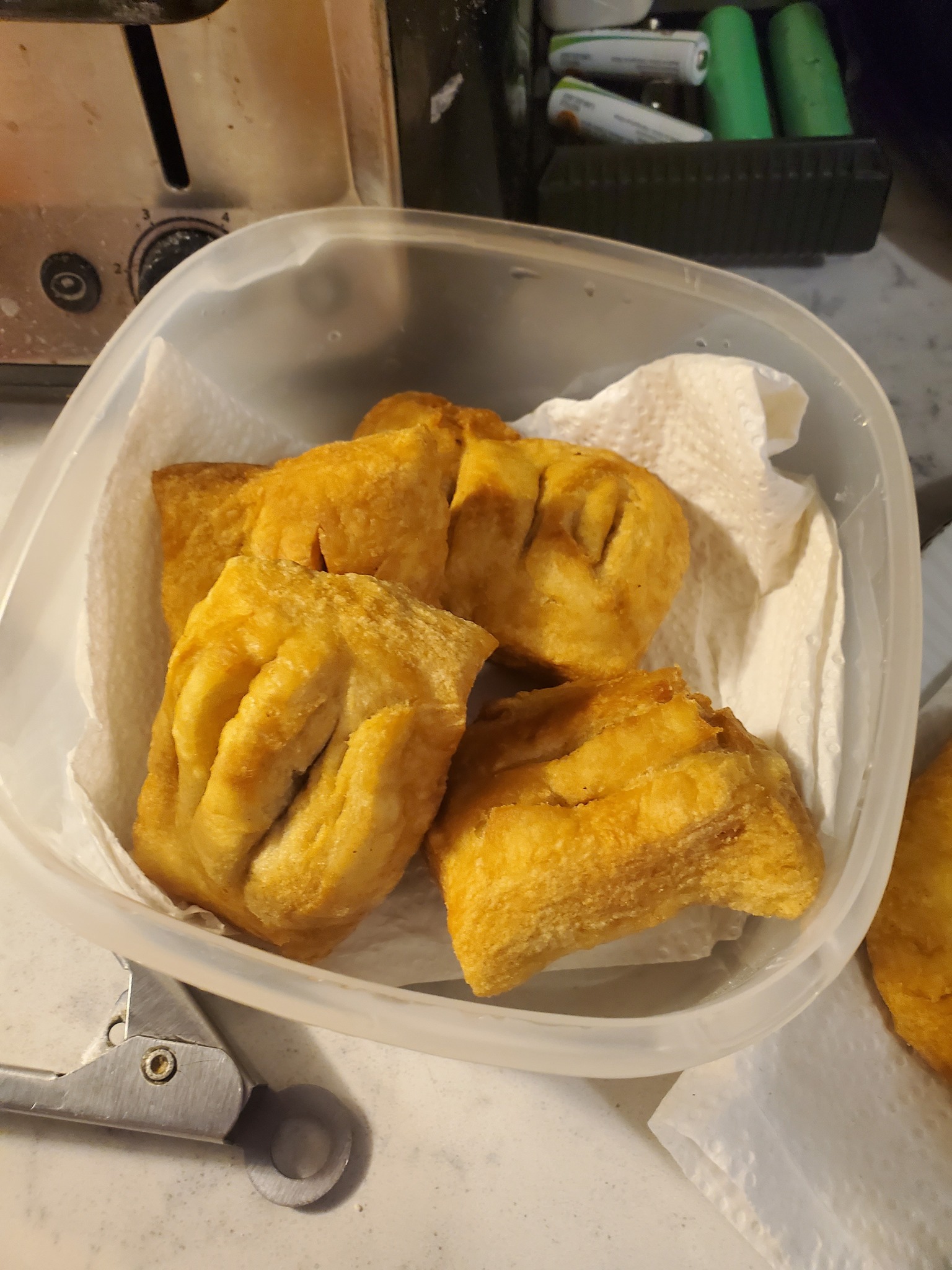
Frybread Bannock is a beloved traditional Indigenous dish that has stood the test of time. Known for its crisp golden exterior and soft, fluffy interior, bannock is more than a food—it’s a cultural staple and a symbol of resilience. Bannock has roots in various Indigenous communities across North America, with different regions having their own take on the recipe.
Today’s version focuses on frybread-style bannock: pan-fried or deep-fried dough that’s quick to prepare and incredibly satisfying to eat. Whether you enjoy it as a snack, a base for tacos, or a side with stews and soups, frybread bannock offers comfort and versatility in every bite.
Ingredients
Here’s what you’ll need:
-
2 cups all-purpose flour
-
1 tablespoon baking powder
-
½ teaspoon salt
-
¾ cup warm water (may need a bit more or less)
-
2 tablespoons oil or melted butter (optional, for added softness)
-
Vegetable oil for frying (approx. 2 cups if deep frying, less if pan-frying)
Optional Add-Ins and Toppings
Add-ins (mixed into the dough):
-
2 tablespoons sugar (for a slightly sweet dough)
-
½ cup raisins or dried cranberries (for a sweet variation)
-
¼ teaspoon ground cinnamon
Toppings:
-
Honey or maple syrup
-
Powdered sugar
-
Savory toppings like taco meat, cheese, salsa (for bannock tacos)
Equipment Needed
-
Large mixing bowl
-
Fork or spoon (for mixing dough)
-
Rolling pin (optional – you can also pat the dough by hand)
-
Heavy-bottomed frying pan or deep fryer
-
Tongs or slotted spoon
-
Paper towels or cooling rack
Instructions
Step 1: Combine Dry Ingredients
In a large mixing bowl, sift together:
-
2 cups of all-purpose flour
-
1 tablespoon of baking powder
-
½ teaspoon of salt
This base mixture should be well-combined and lump-free. Sifting or whisking it helps evenly distribute the baking powder and salt for a uniform rise.
Step 2: Add Liquid Ingredients
Slowly pour in ¾ cup of warm water into the flour mixture. Start mixing with a fork or spoon. You can also add 2 tablespoons of oil or melted butter at this stage if you prefer a richer, softer dough.
Mix just until the dough begins to come together. If it’s too dry, add a tiny bit more water (1 tablespoon at a time). The dough should be soft but not sticky.
Step 3: Knead Lightly
Turn the dough out onto a lightly floured surface. Knead gently for about 30 seconds to 1 minute, just enough to bring everything together. Do not over-knead—this can make the bannock tough.
The dough should be soft and smooth, but not sticky.
Step 4: Divide and Shape
Divide the dough into 6–8 equal portions, depending on how large or thick you want your bannock pieces.
Roll or pat each portion into a round disk about ½ inch thick. Thinner disks will fry up crispier; thicker disks will be fluffier inside. Some people like to poke a small hole in the center to help prevent puffing (like a doughnut), but this is optional.
Step 5: Heat Oil
In a heavy-bottomed frying pan, pour enough vegetable oil to reach about 1–1.5 inches in depth. Heat over medium to medium-high heat until the oil reaches about 350°F (175°C).
You can test the oil by dropping in a tiny piece of dough—if it sizzles and floats, it’s ready.
Step 6: Fry the Bannock
Carefully place 1–2 pieces of shaped dough into the hot oil (don’t overcrowd the pan). Fry for about 2–3 minutes per side, or until golden brown and puffed up. Use tongs or a slotted spoon to flip the dough once bubbles form and the edges look cooked.
Remove each fried bannock and let it drain on a paper towel-lined plate or wire rack. Continue with the remaining pieces.
Step 7: Serve Hot
Serve bannock hot with your choice of sweet or savory toppings. It’s best fresh, but can be reheated in a toaster oven or skillet.
Serving Suggestions
-
As a main dish: Use frybread as a base for Indigenous tacos – top with ground meat, beans, lettuce, tomatoes, cheese, and salsa.
-
As a dessert: Drizzle with honey, powdered sugar, cinnamon, or even chocolate syrup.
-
As a side: Serve with soups and stews, especially traditional dishes like bison stew or moose meat soup.
Tips & Tricks
-
Don’t overmix: The less you handle the dough, the more tender it will be.
-
Temperature control: Too hot, and the outside will brown before the inside is cooked. Too cool, and it’ll absorb oil and become greasy.
-
Leftovers: Store in an airtight container for up to 2 days. Reheat in a toaster oven or pan for best results.
-
Make it vegan: Just use oil instead of butter or animal fats, and skip any dairy add-ins.
Variations
-
Baked Bannock: Don’t want to fry? Pat the dough into a round shape and bake at 375°F (190°C) for 20–25 minutes or until golden. It won’t be frybread, but it’s still bannock!
-
Campfire Bannock: Wrap dough around a stick and cook over open fire—great for camping!
-
Stuffed Bannock: Place cheese, meat, or vegetables in the middle of the dough, fold over, seal, and fry like a turnover.
Cultural Note
Bannock, while a favorite in many Indigenous communities, carries a complex history. Originally introduced by European settlers using flour and lard from rations, it was adapted and embraced by Indigenous peoples across Turtle Island. While it’s not an ancestral food in the pre-contact sense, it has become a vital symbol of survival and identity in the face of colonization and hardship. Today, bannock is lovingly made across generations and celebrated in cultural gatherings, powwows, and family kitchens alike.
Nutrition Information (Per Piece – Approximate)
| Nutrient | Amount |
|---|---|
| Calories | 180–220 kcal |
| Total Fat | 8–12g |
| Saturated Fat | 1.5–3g |
| Carbohydrates | 25–30g |
| Sugar | 0–3g (depending on add-ins) |
| Protein | 3–4g |
| Fiber | 1g |
| Sodium | 180–250mg |
Note: Frying adds more calories and fat, especially if deep-fried. Pan-frying with less oil will reduce the fat content.
Conclusion
Frybread bannock is more than just dough fried in oil—it’s a warm, golden memory on a plate. Whether you grew up eating bannock or you’re making it for the first time, this simple recipe brings joy and heartiness to any meal. With a crispy outside, soft inside, and endless variations, bannock continues to unite families and communities through food.
Try this recipe today, and serve a little piece of Indigenous heritage at your table. Don’t forget to make enough—there’s rarely any left over!