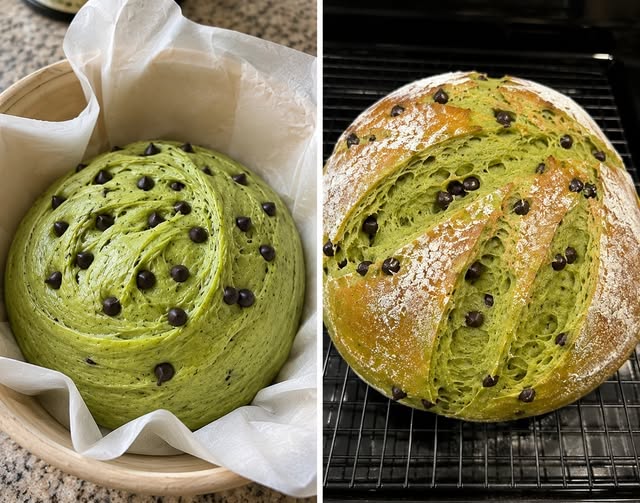
Matcha Sourdough Bread
- Prep Time: 30 minutes
- Autolyse: 45 minutes
- Bulk Fermentation: 4–6 hours
- Cold Proof: 8–12 hours
- Bake Time: 45 minutes
- Cooling Time: 2 hours
- Total Time: Approximately 16–20 hours
Yield
Makes 1 artisan loaf (about 10–12 slices)
Difficulty Level
Intermediate to Advanced
Ingredients
Dough
- 500 grams bread flour
- 350 grams filtered water, room temperature
- 100 grams active sourdough starter
- 10 grams fine sea salt
- 10 grams culinary-grade matcha powder
- 1 teaspoon honey (optional, to balance the matcha)
For Dusting
- Rice flour or bread flour
Equipment
- Digital kitchen scale
- Large mixing bowl
- Dough scraper
- Banneton proofing basket or bowl lined with a clean towel
- Dutch oven with lid
- Sharp bread lame or razor blade
- Cooling rack
Instructions
Step 1: Feed the Starter
Feed your sourdough starter 4–6 hours before mixing the dough. It should be bubbly, active, and able to float in water when ready to use.
Step 2: Mix the Dough
In a large mixing bowl, combine the bread flour, matcha powder, and water until no dry flour remains.
Cover the bowl and let the dough rest for 45 minutes. This process, known as autolyse, helps hydrate the flour and improve gluten development.
Step 3: Add the Starter and Salt
Add the active sourdough starter, salt, and honey (if using).
Mix thoroughly until all ingredients are fully incorporated. The dough will feel sticky, which is normal.
Step 4: Bulk Fermentation
Cover the bowl and allow the dough to ferment at room temperature for 4–6 hours, depending on the temperature of your kitchen.
During the first two hours, perform a series of stretch-and-folds every 30 minutes. Lift one side of the dough, stretch it gently, and fold it over itself. Rotate the bowl and repeat until all four sides have been folded.
The dough is ready when it has increased noticeably in volume and feels airy.
Step 5: Shape the Dough
Turn the dough onto a lightly floured surface.
Shape it into a tight round by gently pulling the edges toward the center and creating surface tension.
Place the dough seam-side up into a floured banneton or towel-lined bowl.
Step 6: Cold Proof
Cover the banneton with a reusable cover or plastic wrap.
Refrigerate for 8–12 hours to develop deeper flavor and improve the dough’s structure.
Step 7: Preheat the Oven
Place a Dutch oven with its lid inside the oven.
Preheat to 475°F (245°C) for at least 30 minutes.
A thoroughly heated Dutch oven helps create steam, producing a crisp crust.
Step 8: Score and Bake
Carefully remove the hot Dutch oven.
Turn the dough onto parchment paper.
Dust lightly with flour if desired.
Using a bread lame or sharp razor blade, score the top of the loaf with one long slash or your preferred decorative pattern.
Transfer the dough into the Dutch oven.
Cover with the lid.
Bake for 25 minutes.
Remove the lid and continue baking for 18–20 minutes, or until the crust is deep golden and the internal temperature reaches approximately 205–210°F (96–99°C).
Step 9: Cool
Transfer the loaf to a cooling rack.
Allow it to cool completely for at least 2 hours before slicing. Cutting too soon may result in a gummy crumb.
Tips for Success
- Use high-quality culinary-grade matcha for the best flavor and color.
- Weigh ingredients using a digital scale for accuracy.
- Ensure your sourdough starter is fully active before mixing.
- Avoid adding extra flour unless necessary, as wetter dough often produces a better crumb.
- Perform gentle stretch-and-folds rather than kneading.
- Let the bread cool completely before slicing.
Recipe Variations
Honey Matcha Bread
Increase the honey to 1 tablespoon for a slightly sweeter loaf.
White Chocolate Matcha Bread
Fold in ½ cup white chocolate chips during the final stretch-and-fold for a dessert-inspired variation.
Matcha Walnut Sourdough
Add ¾ cup chopped toasted walnuts for extra texture and nutty flavor.
Matcha Cranberry Bread
Mix in ½ cup dried cranberries for a sweet and tart contrast.
Sesame Matcha Loaf
Sprinkle black or white sesame seeds over the loaf before baking for added crunch and visual appeal.
Serving Suggestions
Matcha Sourdough Bread pairs wonderfully with:
- Salted butter
- Honey
- Cream cheese
- Strawberry jam
- Lemon curd
- Avocado
- Smoked salmon
- Egg salad
- Fresh berries
- Matcha latte or green tea
It also makes delicious toast, gourmet sandwiches, and unique French toast.
Storage
Store the cooled loaf in a paper bag or bread box at room temperature for up to 3 days.
For longer storage, keep it in an airtight container for up to 5 days, though the crust may soften.
Freezing
Slice the bread and freeze it in freezer-safe bags for up to 3 months.
Toast slices directly from frozen or thaw at room temperature.
Reheating
Oven
Warm the whole loaf at 350°F (175°C) for 10–12 minutes to refresh the crust.
Toaster
Toast individual slices until lightly crisp and heated through.
Common Mistakes to Avoid
- Using an inactive sourdough starter.
- Skipping the stretch-and-fold process.
- Underproofing or overproofing the dough.
- Slicing the bread while still warm.
- Using low-quality matcha, which may produce a dull color and bitter flavor.
- Forgetting to preheat the Dutch oven thoroughly.
Frequently Asked Questions
Can I use all-purpose flour?
Bread flour is recommended for the best structure, but all-purpose flour can be used with slightly different results.
Does the bread taste strongly like matcha?
No. The matcha provides a mild earthy flavor that complements the tanginess of the sourdough without overpowering it.
Can I add seeds or nuts?
Yes. Sunflower seeds, pumpkin seeds, walnuts, or pecans all make excellent additions.
Why is my bread dense?
Dense bread is often caused by an inactive starter, insufficient fermentation, or underdeveloped gluten.
Nutrition Information (Per Slice)
- Calories: 175
- Protein: 6g
- Carbohydrates: 34g
- Fat: 1g
- Saturated Fat: 0g
- Cholesterol: 0mg
- Sodium: 210mg
- Fiber: 2g
- Sugar: 1g
- Calcium: 15mg
- Iron: 2mg
- Potassium: 80mg