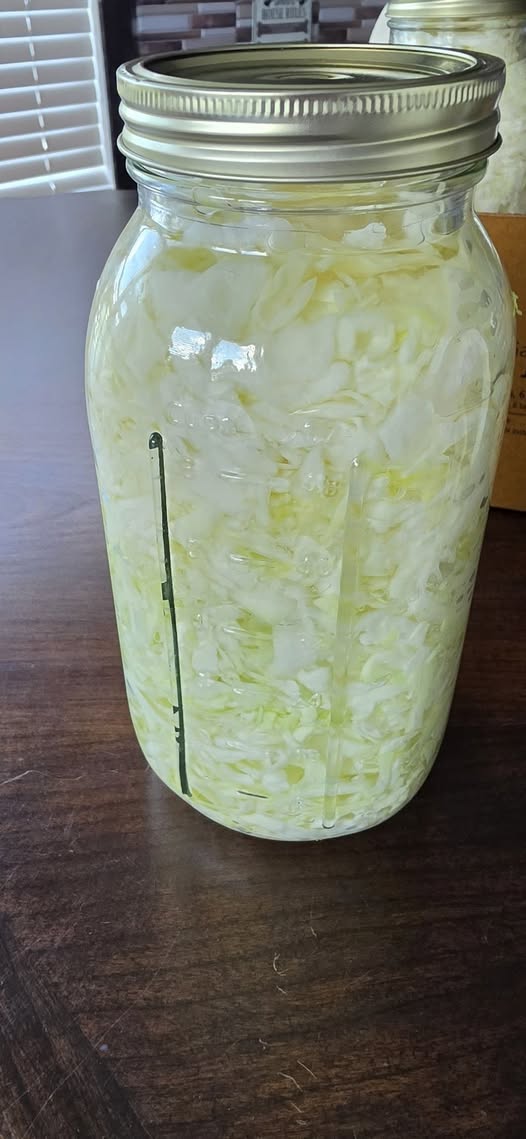
Sauerkraut
- Prep Time: 25 minutes
- Resting Time: 30 minutes
- Fermentation Time: 1–4 weeks
- Total Time: Approximately 1–4 weeks
Difficulty Level
Easy
Although fermentation takes time, the process is simple and beginner-friendly.
Yield
Makes about 1 quart (approximately 8 servings)
Ingredients
- 2 pounds (900 g) green cabbage (about 1 medium head)
- 1½ tablespoons fine sea salt or kosher salt (non-iodized)
Optional Flavor Additions
- 1 teaspoon caraway seeds
- 1 teaspoon mustard seeds
- 1 teaspoon dill seeds
- 2 cloves garlic, thinly sliced
- 1 teaspoon juniper berries
- 1 small grated carrot
- 1 teaspoon black peppercorns
Kitchen Equipment
- Large mixing bowl
- Sharp chef’s knife
- Cutting board
- Kitchen scale (recommended)
- Clean wide-mouth glass jar or fermentation crock
- Wooden spoon or cabbage tamper
- Fermentation weight or small clean glass jar
- Clean kitchen towel or fermentation lid
Instructions
Step 1: Prepare the Cabbage
Remove any damaged outer leaves and set one clean leaf aside for later use.
Cut the cabbage into quarters and remove the core.
Slice the cabbage into thin, even strips.
Place the shredded cabbage into a large mixing bowl.
Step 2: Add the Salt
Sprinkle the salt evenly over the cabbage.
If using optional spices or garlic, add them now.
Step 3: Massage the Cabbage
Using clean hands, massage and squeeze the cabbage vigorously for 8–10 minutes.
Intensity: Medium to Firm Hand Pressure
The cabbage will soften and begin releasing its natural juices. Continue until there is enough liquid to partially cover the cabbage.
Let the cabbage rest for 30 minutes, then massage briefly again if needed.
Step 4: Pack the Jar
Transfer the cabbage to a clean glass jar a handful at a time.
Press each layer down firmly using a tamper or wooden spoon to remove air pockets.
Continue until all the cabbage is packed tightly.
Pour any remaining cabbage juice into the jar.
The cabbage should be completely submerged beneath the liquid. If needed, press it down further.
Step 5: Weigh It Down
Place the reserved cabbage leaf over the shredded cabbage.
Add a fermentation weight or a small clean glass jar to keep the cabbage submerged below the brine.
Cover the jar with a fermentation lid or a clean cloth secured with a rubber band.
Step 6: Ferment
Place the jar in a cool, dark location.
Ideal Fermentation Temperature: 65–72°F (18–22°C)
Allow the sauerkraut to ferment for:
- 7 days: Mild flavor
- 14 days: Balanced tanginess
- 21–28 days: Rich, traditional sour flavor
Check daily to ensure the cabbage remains submerged in the brine.
If using a standard lid, “burp” the jar once a day during the first week by briefly loosening the lid to release built-up gas.
Step 7: Taste and Refrigerate
Taste the sauerkraut after one week.
Once it reaches your preferred level of tanginess, remove the fermentation weight and transfer the jar to the refrigerator.
Cold storage slows fermentation and helps preserve flavor and texture.
Fermentation Conditions
Since sauerkraut is naturally fermented rather than cooked, temperature is more important than heat.
- Fermentation Temperature: 65–72°F (18–22°C)
- Preparation Intensity: Medium to Firm Hand Pressure
- Packing Intensity: Firm Compression
- Fermentation Time: 1–4 weeks
Serving Suggestions
Homemade sauerkraut is delicious served with:
- Grilled sausages
- Bratwurst
- Hot dogs
- Reuben sandwiches
- Burgers
- Pulled pork
- Roasted chicken
- Mashed potatoes
- Grain bowls
- Green salads
- Avocado toast
- Scrambled eggs
It also makes a flavorful topping for tacos, wraps, and baked potatoes.
Tips for Success
- Use fresh, firm cabbage.
- Measure the salt accurately for safe fermentation.
- Avoid iodized salt, which can interfere with fermentation.
- Always keep the cabbage submerged beneath the brine.
- Use clean utensils and jars to reduce the risk of contamination.
- Ferment in a cool, stable environment away from direct sunlight.
Delicious Variations
Classic Caraway Sauerkraut
Add 1 teaspoon of caraway seeds for a traditional German-style flavor.
Garlic Sauerkraut
Mix in thinly sliced garlic for a bold, savory twist.
Spicy Sauerkraut
Add sliced jalapeños, crushed red pepper flakes, or fresh chili peppers.
Apple Sauerkraut
Include one grated tart apple for a subtle sweetness that balances the tang.
Dill Sauerkraut
Add fresh dill or dill seeds for a bright, herbaceous flavor.
Storage Instructions
Store finished sauerkraut in the refrigerator in a tightly sealed container.
It will keep for 3–6 months when refrigerated and submerged in its brine.
Always use a clean utensil to remove portions.
Common Mistakes to Avoid
- Using iodized salt instead of non-iodized salt.
- Allowing cabbage to rise above the brine.
- Using dirty jars or utensils.
- Fermenting in temperatures that are too warm or too cold.
- Overfilling the jar, leaving no room for expanding brine.
- Discarding the natural juices released during massaging.
Health Benefits
Sauerkraut is naturally rich in probiotics created during fermentation, which may support digestive health. It is also a good source of vitamin C, vitamin K, and dietary fiber. Cabbage contains beneficial plant compounds and antioxidants, while fermentation can enhance the bioavailability of certain nutrients. Enjoy sauerkraut as part of a balanced diet for its flavor and nutritional value.
Frequently Asked Questions
Can I use red cabbage?
Yes. Red cabbage ferments beautifully and creates a colorful variation with a slightly earthier flavor.
Why isn’t there enough brine?
Continue massaging the cabbage, and let it rest longer. Fresh cabbage usually releases enough liquid. If absolutely necessary, you can top up with a light saltwater brine made using 1 teaspoon of non-iodized salt dissolved in 1 cup (240 ml) of water.
How do I know when it’s ready?
Taste it after one week. Continue fermenting until it reaches the level of sourness you enjoy.
Can I freeze sauerkraut?
Yes, but freezing may reduce the number of live probiotic cultures and soften the texture.
Is homemade sauerkraut safe?
When prepared with clean equipment, the correct amount of salt, and proper fermentation practices, homemade sauerkraut is generally safe to make. If you notice unusual colors, foul odors, or extensive fuzzy mold, discard the batch.
Final Thoughts
Homemade Sauerkraut is a timeless fermented food that’s simple to prepare yet packed with flavor. With just cabbage, salt, and a little patience, you can create a crisp, tangy condiment that complements countless meals. The fermentation process develops complex flavors while naturally preserving the cabbage, making this recipe a rewarding addition to your kitchen. Once you’ve mastered the basic method, experiment with herbs, spices, and vegetables to create your own signature version.
Nutrition Information (Per Serving, Approximate)
- Calories: 18
- Protein: 1 g
- Carbohydrates: 4 g
- Dietary Fiber: 2 g
- Total Sugars: 2 g
- Fat: 0 g
- Saturated Fat: 0 g
- Cholesterol: 0 mg
- Sodium: 290 mg
- Potassium: 150 mg
- Calcium: 35 mg
- Iron: 0.4 mg
- Vitamin C: 18 mg
- Vitamin K: 65 mcg