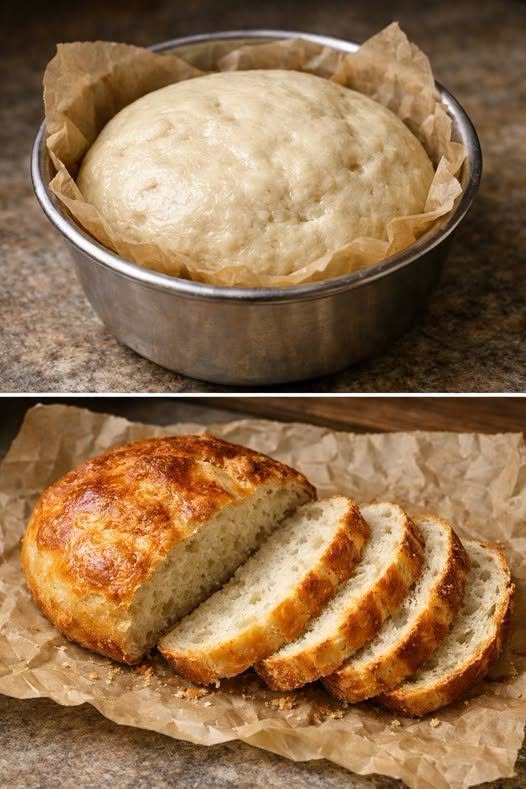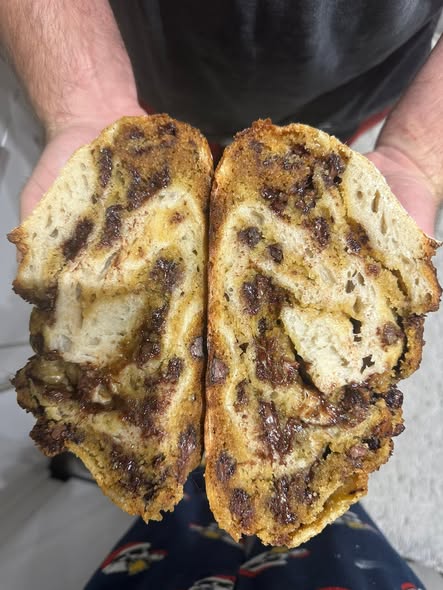
sourdough inclusion loaf
- Prep Time: 45 minutes
- Bulk Fermentation: 4–6 hours
- Cold Proof: 8–12 hours (optional but recommended)
- Bake Time: 45–50 minutes
- Total Time: Approximately 14–18 hours
- Difficulty: Intermediate
- Yield: 1 large loaf (10–12 slices)
- Cuisine: Artisan Bread
Ingredients
For the Dough
- 500 g bread flour
- 350 g water (room temperature)
- 100 g active sourdough starter (100% hydration)
- 10 g fine sea salt
Suggested Inclusions (Choose One Combination)
Cheddar Jalapeño
- 150 g sharp cheddar cheese, cubed
- 1–2 jalapeños, finely diced
Rosemary Garlic
- 2 tablespoons chopped fresh rosemary
- 8 roasted garlic cloves
Cranberry Walnut
- 100 g dried cranberries
- 75 g chopped walnuts
Olive Herb
- 120 g pitted olives, sliced
- 1 teaspoon dried oregano
Cinnamon Raisin
- 100 g raisins
- 2 teaspoons ground cinnamon
Equipment Needed
- Large mixing bowl
- Kitchen scale
- Dough scraper
- Banneton or proofing basket
- Dutch oven with lid
- Parchment paper
- Sharp bread lame or razor blade
- Cooling rack
Instructions
Step 1: Feed the Starter
Feed your sourdough starter 4–6 hours before mixing the dough. It should be bubbly, active, and have doubled in size.
Step 2: Mix the Dough
In a large bowl, combine the bread flour and water. Mix until no dry flour remains.
Cover and let the dough rest for 30 minutes (autolyse).
After the rest, add the active sourdough starter and salt. Mix thoroughly until fully incorporated.
Step 3: Stretch and Fold
During the first 2 hours of bulk fermentation, perform 4 sets of stretch and folds, spacing them 30 minutes apart.
With each set, gently stretch one side of the dough upward and fold it over the center. Rotate the bowl and repeat until all sides have been folded.
Step 4: Add the Inclusions
During the second or third set of folds, gently spread the dough out and evenly distribute your chosen inclusions over the surface.
Fold the dough over itself several times to enclose the ingredients without tearing the dough.
Continue with the remaining folds as scheduled.
Step 5: Bulk Fermentation
Allow the dough to continue fermenting until it has increased in volume by about 40–50% and feels airy and elastic.
This usually takes 4–6 hours, depending on room temperature and starter activity.
Step 6: Pre-Shape
Turn the dough onto a lightly floured work surface.
Shape it gently into a loose round.
Let it rest uncovered for 20 minutes.
Step 7: Final Shape
Shape the dough into a tight round or oval, creating surface tension without deflating the dough.
Place it seam-side up in a well-floured banneton or proofing basket.
Step 8: Cold Proof
Cover the basket and refrigerate the dough for 8–12 hours.
Cold proofing develops flavor and makes scoring easier.
If you prefer, proof at room temperature for 1–2 hours, though the flavor will be less developed.
Step 9: Preheat the Oven
Place a Dutch oven with its lid inside your oven.
Preheat to 475°F (245°C) for at least 30 minutes.
A thoroughly heated Dutch oven helps produce maximum oven spring and a crisp crust.
Step 10: Score and Bake
Turn the dough onto parchment paper.
Use a bread lame or sharp razor to score the top with one long slash or your preferred decorative pattern.
Carefully transfer the dough into the hot Dutch oven.
Bake:
- 30 minutes covered
- 15–20 minutes uncovered
The loaf is finished when it has a deep golden-brown crust and reaches an internal temperature of approximately 205–210°F (96–99°C).
Step 11: Cool
Transfer the bread to a cooling rack.
Allow it to cool for at least 1 hour before slicing to preserve the crumb structure.
Tips for Success
- Use a strong, active sourdough starter.
- Weigh ingredients for the most accurate results.
- Add inclusions gently to avoid tearing the dough.
- Don’t overload the dough with mix-ins, as too many can affect structure.
- Allow the loaf to cool completely before slicing.
- Store in a paper bag or bread box to maintain a crisp crust.
Popular Inclusion Ideas
- Sharp cheddar and chives
- Roasted garlic and Parmesan
- Sun-dried tomatoes and basil
- Feta and olives
- Caramelized onions
- Pumpkin seeds and flaxseed
- Dried apricots and pistachios
- Dark chocolate chunks and orange zest
Serving Suggestions
Sourdough inclusion loaf pairs beautifully with:
- Butter
- Olive oil and balsamic vinegar
- Soft cheeses
- Soup
- Salad
- Scrambled eggs
- Avocado toast
- Grilled cheese sandwiches
- Charcuterie boards
- Roasted vegetables
- Homemade jam
Storage
Store the loaf at room temperature in a paper bag or bread box for up to 3 days.
Avoid refrigerating, as it can cause the bread to stale more quickly.
Freezing
Slice the loaf before freezing for convenience.
Wrap tightly in plastic wrap and place in a freezer-safe bag.
Freeze for up to 3 months.
Toast slices directly from frozen or thaw at room temperature.
Frequently Asked Questions
What are sourdough inclusions?
Inclusions are ingredients mixed into the dough—such as cheese, herbs, dried fruit, nuts, seeds, or olives—to add flavor and texture.
When should I add inclusions?
The best time is during the second or third stretch-and-fold. This helps distribute them evenly without overworking the dough.
Can I use whole wheat flour?
Yes. Replace up to 30% of the bread flour with whole wheat flour. You may need to add a little more water because whole wheat flour absorbs more moisture.
Why is my loaf dense?
Common causes include an inactive starter, under-fermentation, overproofing, or adding too many inclusions.
Do I need a Dutch oven?
A Dutch oven is recommended because it traps steam, creating excellent oven spring and a crisp crust. If you don’t have one, bake on a preheated baking stone and add steam to the oven using an oven-safe pan of hot water.
Nutrition Information
Approximate values per slice (based on 12 slices, plain loaf):
- Calories: 185
- Protein: 6 g
- Fat: 1 g
- Carbohydrates: 38 g
- Dietary Fiber: 2 g
- Sugars: 1 g
- Sodium: 195 mg
- Calcium: 2% Daily Value
- Iron: 10% Daily Value