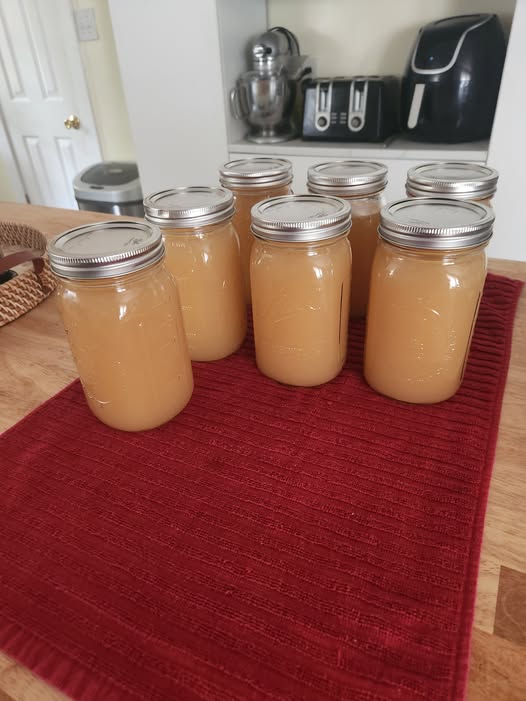
chicken bone broth
- Prep Time: 15 minutes
- Cook Time: 12–24 hours
- Total Time: 12 hours 15 minutes to 24 hours 15 minutes
Cooking Intensity
- Difficulty Level: Easy
- Cooking Method: Slow Simmer
- Heat Level: Low
- Best Equipment: Large stockpot, slow cooker, or pressure cooker
Ingredients
- 2–3 pounds chicken bones (carcass, backs, necks, wings, feet, or a combination)
- 2 medium onions, quartered
- 3 carrots, chopped
- 3 celery stalks, chopped
- 8 garlic cloves, smashed
- 2 tablespoons apple cider vinegar
- 2 bay leaves
- 1 teaspoon whole black peppercorns
- 5–6 fresh parsley stems
- 2 sprigs fresh thyme
- 1 teaspoon sea salt (add more after cooking if desired)
- 12–16 cups cold water
Optional Additions
- Fresh rosemary
- Ginger slices
- Turmeric
- Mushrooms
- Leeks
- Parsnips
- Fresh dill
- Chicken feet for extra collagen
Equipment Needed
- Large stockpot (8–12 quart)
- Fine mesh strainer
- Cheesecloth (optional)
- Large bowl
- Storage jars or freezer-safe containers
Instructions
Step 1: Prepare the Bones
If using raw chicken bones, roast them first for deeper flavor.
Arrange the bones on a baking sheet and roast at 425°F (220°C) for 35–45 minutes, turning once until golden brown.
Roasting creates a richer, darker broth with incredible flavor.
If using the carcass from a roasted chicken, you can skip this step.
Step 2: Add Ingredients
Place the roasted bones into a large stockpot.
Add:
- Onions
- Carrots
- Celery
- Garlic
- Bay leaves
- Peppercorns
- Herbs
- Apple cider vinegar
Cover everything with cold water.
Allow the mixture to sit for about 20 minutes before heating. The vinegar helps extract minerals from the bones.
Step 3: Bring to a Simmer
Place the pot over medium-high heat until tiny bubbles begin forming.
Avoid a vigorous boil.
Reduce the heat to low and maintain a gentle simmer.
Skim off any foam that rises during the first hour.
Step 4: Simmer Slowly
Let the broth cook for:
- Stockpot: 12–24 hours
- Slow Cooker: Low for 18–24 hours
- Pressure Cooker: High pressure for 3 hours
The longer the broth cooks, the richer and more flavorful it becomes.
Add more water if necessary to keep the bones submerged.
Step 5: Strain
Carefully pour the broth through a fine mesh strainer into a large bowl.
Discard the vegetables and bones.
For an extra-clear broth, strain again through cheesecloth.
Step 6: Cool
Allow the broth to cool.
Refrigerate until the fat rises and solidifies.
Remove the hardened fat if desired, or leave some for additional flavor.
A properly made bone broth often becomes slightly gelatinous when chilled because of the natural collagen.
Storage
Refrigerator
Store for up to 5 days in airtight containers.
Freezer
Freeze for up to 6 months.
Freeze in:
- Mason jars (leave expansion space)
- Ice cube trays
- Souper Cubes
- Freezer bags
Small frozen portions are convenient for cooking.
Serving Suggestions
Enjoy chicken bone broth:
- As a warm beverage
- In chicken noodle soup
- For vegetable soups
- In risotto
- Cooking rice
- Making gravy
- Braising meats
- Cooking quinoa
- Preparing sauces
- Adding flavor to mashed potatoes
Tips for the Best Bone Broth
Use Different Bones
A mixture of wings, backs, necks, and feet creates the richest broth.
Roast First
Roasted bones develop a much deeper flavor.
Don’t Boil
Boiling makes broth cloudy and may produce a harsher flavor.
Simmer Patiently
Long cooking extracts maximum flavor and collagen.
Add Salt Later
Keep salt light during cooking so the broth stays versatile for future recipes.
Flavor Variations
Herb Bone Broth
Add rosemary, sage, and oregano.
Garlic Bone Broth
Double the garlic for a stronger savory flavor.
Ginger Bone Broth
Add sliced fresh ginger for warmth and aroma.
Turmeric Broth
Include turmeric and black pepper for an earthy twist.
Mushroom Bone Broth
Add dried shiitake mushrooms during simmering for extra umami.
Common Mistakes
- Boiling instead of simmering
- Using too much salt
- Not roasting raw bones
- Cooking for too short a time
- Using too little water
- Skipping the vinegar
- Forgetting to skim impurities
Frequently Asked Questions
Can I reuse the bones?
You can reuse them once, but the second batch will be lighter in flavor and nutrients.
Why is my broth gelatinous?
That’s a great sign. Gelatin indicates collagen has been extracted successfully from the bones.
Is cloudy broth okay?
Yes. Cloudiness affects appearance but not flavor or safety.
Can I freeze bone broth?
Absolutely. Freeze in meal-sized portions for easy use.
How do I make it richer?
Use more bones, roast them first, and simmer for up to 24 hours.
Nutrition Information (Per 1 Cup, Approximate)
- Calories: 40
- Protein: 9g
- Fat: 1g
- Carbohydrates: 1g
- Fiber: 0g
- Sugars: 0g
- Sodium: 140mg (varies with added salt)
- Calcium: 20mg
- Potassium: 120mg
- Iron: 0.4mg