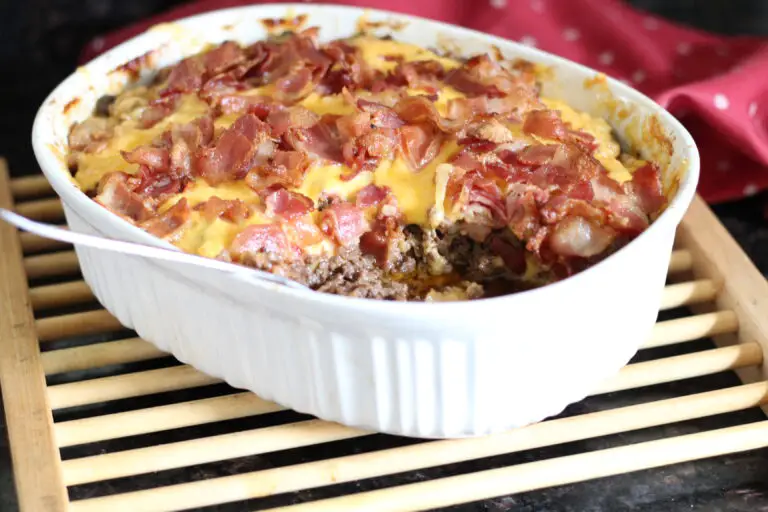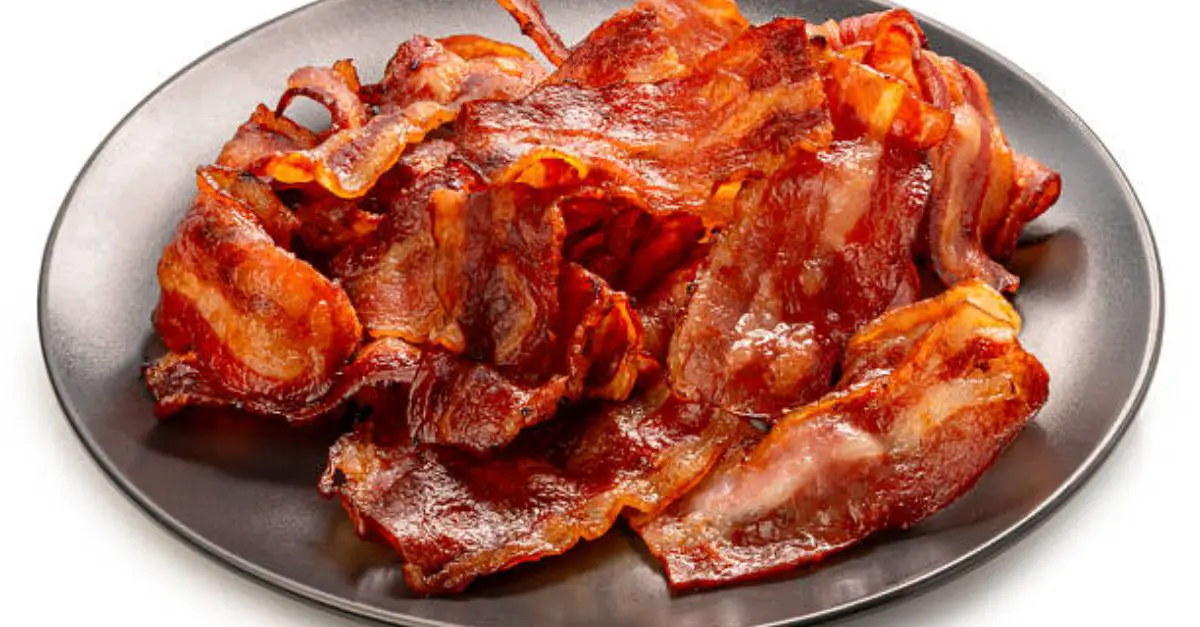
crispy cooked bacon
Prep Time: 5 minutes
Cook Time: 15–20 minutes
Total Time: 20–25 minutes
Intensity Level: Easy (1 out of 5)
Intensity Details: Minimal active cooking; requires basic knife handling and oven safety. No intense heat management or complex techniques.
Servings: 4–6 (adjustable based on bacon quantity)
Yield: 12–16 slices
Why This Recipe Works
Stovetop bacon is messy, uneven, and demands constant attention. This oven method delivers uniformly crispy, flat bacon with no curling, no splattering grease, and very little hands-on work. The low-and-slow start renders fat gently, while the final high-heat blast creates that coveted shatter-crisp texture. Perfect for breakfast, BLTs, salads, or crumbling over pasta.
Ingredients
-
12–16 slices (about 1 pound / 450g) regular-cut bacon *
-
Optional: freshly ground black pepper or brown sugar (for candied bacon)
*Thick-cut bacon works too; increase cook time by 5–8 minutes.*
Equipment
-
Rimmed baking sheet (half-sheet pan, 13×18 inches)
-
Aluminum foil or parchment paper
-
Wire cooling rack (optional, for extra crispiness)
-
Tongs
-
Paper towels
Instructions
Step 1 – Prepare the Oven and Pan
Preheat your oven to 375°F (190°C). Line a rimmed baking sheet with aluminum foil (for easy cleanup) and place a wire rack on top. Intensity: Very low – just setting up.
Why the rack? Elevating the bacon allows hot air to circulate underneath, cooking both sides evenly and eliminating the need to flip. No rack? Use foil only; you’ll need to flip the bacon halfway.
Step 2 – Arrange the Bacon
Lay bacon slices in a single layer on the rack or directly on the foil. They can touch slightly but should not overlap. Overlap = chewy, undercooked spots. Intensity: Low – repetitive but simple.
Step 3 – Optional Seasoning
If making candied bacon, sprinkle a light, even layer of brown sugar over the slices. For savory, add a crack of black pepper.
Step 4 – Bake – First Phase
Place the baking sheet on the middle oven rack. Bake at 375°F (190°C) for 10 minutes. Intensity: Minimal – just waiting.
Step 5 – Rotate and Increase Heat (for maximum crisp)
After 10 minutes, carefully remove the pan using oven mitts. If you’re not using a rack, flip each slice with tongs. Rotate the pan 180 degrees for even browning. Increase oven temperature to 425°F (218°C). Return the pan to the oven. Intensity: Moderate – handling hot pan and bacon.
Step 6 – Final Crisping
Bake for another 5–10 minutes at 425°F. Start checking at 5 minutes. Regular-cut bacon typically finishes at 5–7 minutes; thick-cut may need 10–12. Desired doneness:
-
For chewy-crisp: 5 minutes
-
For shatter-crisp: 7–9 minutes
-
Watch closely – bacon can go from perfect to burnt in 60 seconds.
Step 7 – Drain and Cool
Remove the pan from the oven. Using tongs, transfer bacon to a paper-towel-lined plate to absorb excess grease. Let rest for 2 minutes – it will continue to crisp as it cools. Intensity: Low – transferring.
Chef’s Tips for Ultimate Crispy Bacon
-
Start cold: Do not preheat the pan. Cold pan + cold bacon = slower fat rendering.
-
Avoid crowding: Use two sheets if making a large batch, rotating racks halfway through.
-
Save the drippings: Strain rendered fat through a fine-mesh sieve into a jar. Store in the fridge for roasting vegetables or frying eggs.
-
Thick-cut adjustment: Bake at 375°F for 15 minutes, then 425°F for 8–12 minutes.
-
Turbo crisp (convection oven): Reduce temperature by 25°F and check 2–3 minutes earlier.
Storage & Reheating
-
Refrigerate: Store in an airtight container with paper towels between layers for up to 1 week.
-
Freeze: Flash-freeze on a tray, then transfer to a freezer bag. Keeps for 3 months.
-
Reheat: Microwave on a paper-towel-lined plate (15–20 seconds) or in a 350°F oven for 3–4 minutes.
Recipe Intensities Summary
| Phase | Intensity (1–5) | Why |
|---|---|---|
| Prep & lining pan | 1 | Trivial; no heat or sharp tools needed |
| Arranging bacon | 1.5 | Slightly tedious but calm |
| Baking (first 10 min) | 1 | Set and forget |
| Handling hot pan & flipping | 3 | Requires mitts, care, and speed |
| Final crisp watching | 2.5 | Attention needed to avoid burning |
| Draining & cooling | 1 | Easy w/ tongs |
Overall Intensity: Level 1 – Easy
Perfect for beginners, kids (with adult oven help), or lazy Sunday mornings.
Nutritional Information (per 2 slices of regular-cut crispy bacon)
Calculated using USDA data for pan-fried, drained bacon. Values are estimates.
| Nutrient | Amount |
|---|---|
| Calories | 86 kcal |
| Total Fat | 6.6 g |
| Saturated Fat | 2.2 g |
| Trans Fat | 0 g |
| Cholesterol | 15 mg |
| Sodium | 310 mg |
| Total Carbohydrates | 0.3 g |
| Dietary Fiber | 0 g |
| Total Sugars | 0 g |
| Protein | 6.0 g |
| Iron | 0.2 mg |
| Potassium | 83 mg |
% Daily Values (based on 2,000-calorie diet):
-
Fat: 10%
-
Saturated Fat: 11%
-
Sodium: 13%
-
Protein: 12%