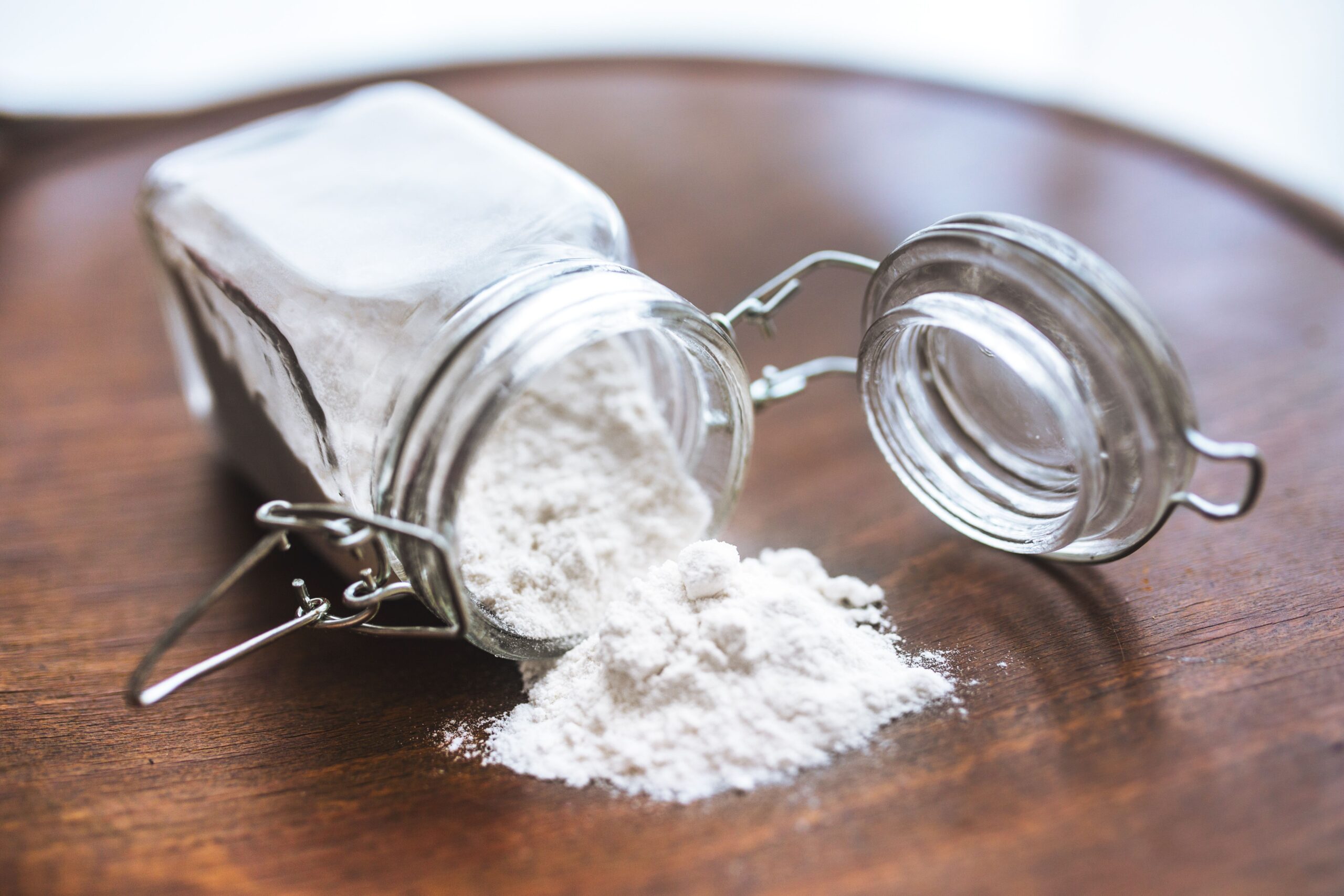
baking soda
Recipe Snapshot & Timing
-
Prep Time: 20 minutes
-
Chill Time: 60 minutes
-
Bake Time: 10–12 minutes per batch
-
Total Time: 1 hour 32 minutes
-
Yield: 24 large cookies (approx. 2.5 oz each)
-
Skill Level / Recipe Intensity: Moderate (requires dough chilling and precise oven monitoring)
-
Heat Intensity: Medium-high baking heat (375°F / 190°C)
The Food Science: Why Baking Soda Matters Here
In quick breads and soft cookies, baking soda ($NaHCO_3$) acts as an alkaline leavening agent. Unlike baking powder—which contains an inbuilt dry acid—pure baking soda requires an acidic counterpart to trigger leavening. In this dough, unsulfured blackstrap molasses provides the acidity.
When the wet and dry ingredients merge, the sodium bicarbonate immediately reacts with the acids in the molasses, releasing carbon dioxide ($CO_2$) bubbles trapped within the gluten network. Furthermore, because baking soda increases the alkalinity (pH) of the dough, it weakens gluten strands to ensure a soft, melt-in-your-mouth interior while breaking down reducing sugars to create a signature, crinkled exterior crust.
Equipment Needed
-
Stand mixer fitted with paddle attachment (or electric hand mixer)
-
Large mixing bowl & medium sifter
-
Digital kitchen scale
-
2 large rimmed aluminum baking sheets
-
Unbleached parchment paper
-
#24 cookie scoop (approx. 3 tablespoons volume)
-
Wire cooling rack
Ingredients
Dry Ingredients
-
All-Purpose Flour: 450 g (approx. 3 ¾ cups), spooned and leveled
-
Baking Soda (Sodium Bicarbonate): 12 g (2 ½ teaspoons), fresh and sifted
-
Fine Sea Salt: 4 g (¾ teaspoon)
-
Ground Ginger: 8 g (1 tablespoon)
-
Ground Saigon Cinnamon: 6 g (2 teaspoons)
-
Ground Cloves: 2 g (½ teaspoon)
-
Ground Nutmeg: 1.5 g (½ teaspoon), freshly grated
-
Black Pepper: 0.5 g (¼ teaspoon), finely ground (enhances heat and spice depth)
Wet Ingredients
-
Unsalted Butter: 225 g (1 cup / 2 sticks), softened to 65°F–68°F
-
Dark Brown Sugar: 200 g (1 cup, packed)
-
Granulated White Sugar: 100 g (½ cup)
-
Large Eggs: 2 whole eggs (approx. 100 g out of shell), room temperature
-
Dark Molasses (Unsulfured): 160 g (½ cup) (Do not use blackstrap unless you prefer a bitter edge; Grandma’s or Brer Rabbit original is ideal)
-
Pure Vanilla Extract: 10 ml (2 teaspoons)
Rolling Sugar
-
Turbinado or Demerara Raw Cane Sugar: 100 g (½ cup), for rolling
Step-by-Step Instructions
Step 1: Aerate and Sift the Dry Base
In a large bowl, whisk together the all-purpose flour, fine sea salt, ground ginger, cinnamon, cloves, nutmeg, black pepper, and the baking soda. Sifting is vital here: baking soda tends to form stubborn, alkaline clumps in storage. Sifting guarantees uniform distribution so every single cookie rises evenly without pockets of bitter saltiness. Set aside.
Step 2: Cream Butter and Sugars
Attach the paddle to your stand mixer. Add the softened butter, packed dark brown sugar, and granulated white sugar. Beat on medium speed (Speed 4) for 3 to 4 minutes. The mixture should transition from a dense paste to a lighter, fluffy, pale-tan texture. Pause halfway to scrape the sides and bottom of the bowl with a silicone spatula.
Step 3: Emulsify Liquids and Aromatics
Lower the mixer speed to medium-low (Speed 2). Add the eggs one at a time, allowing each egg to fully incorporate before introducing the next. Stream in the molasses and pure vanilla extract. Beat until smooth and glossy, roughly 60 seconds. The batter will turn a rich, liquid-caramel shade.
Step 4: Fold the Dough (Avoid Overworking)
Turn the mixer to low (Speed 1). Gradually add the dry flour-and-spice mixture in three separate additions, mixing only until the last streak of flour disappears. Over-mixing activates gluten sheets, turning soft cookies tough. The resulting dough will be thick, sticky, and fragrant.
Step 5: Temperature Rest & Chill (Intensity: Low/Passive)
Cover the bowl tightly with food-grade plastic wrap, pressing the film directly onto the surface of the dough to prevent a crust from forming. Transfer to the refrigerator for at least 60 minutes (up to 24 hours).
Pro Tip: Chilling solidifies the butterfat, hydrates the flour starch granules, and gives the baking soda time to initiate subtle enzymatic flavor development. Chilled dough prevents cookies from spreading flat like pancakes on the hot sheet.
Step 6: Portion and Sugar-Roll
Preheat your oven to 375°F (190°C) with baking racks placed in the upper-middle and lower-middle thirds. Line two large baking sheets with unbleached parchment paper. Place the turbinado sugar in a wide, shallow bowl.
Using a #24 scoop, portion chilled dough into 45-gram balls (about 1.5 inches in diameter). Gently roll between your palms to smooth out the spheres, then toss thoroughly in the coarse turbinado sugar until completely coated. Place balls on the prepared sheets, leaving 2.5 inches of clearance between each dough portion.
Step 7: Bake to Crackled Perfection (Intensity: High)
Slide the trays into the oven. Bake for 10 to 12 minutes.
-
At minute 7, the cookies will puff like soft domes as the baking soda reacts to heat.
-
At minute 9, rotate sheets front-to-back and top-to-bottom.
-
Pull the cookies out when the edges are set and lightly browned, the centers still look slightly soft and puffed, and visible fissures run across the top. Do not overbake; carry-over cooking on the hot tray will set the centers into a chewy fudge-like texture.
Step 8: Cool and Settle
Leave the cookies on the hot baking sheet for 5 minutes. As the trapped steam escapes, the domes will settle into signature flat, crinkly discs. Transfer the cookies with an offset spatula to a wire cooling rack to cool completely.
Baker’s Troubleshooting & Storage
-
Why didn’t my cookies crack? Either the oven temperature was too low, the dough was too warm, or your baking soda has lost its potency. To test baking soda: drop ½ teaspoon into 2 tablespoons of distilled white vinegar. If it fizzes violently, it is active; if it produces sluggish bubbles, replace the box.
-
Room Temperature Storage: Store completely cooled cookies in an airtight tin or container separated by wax paper for up to 7 days. Adding a slice of sandwich bread to the container keeps them chewy for over a week.
-
Freezing: Freeze rolled, unbaked dough balls on a tray for 2 hours, then store in a zip-top freezer bag for up to 3 months. Bake straight from frozen at 350°F (175°C) for 13–14 minutes.
Nutrition Information
Serving Size: 1 cookie (approx. 45 g baked)
Servings Per Recipe: 24
| Nutrient | Amount Per Serving | % Daily Value* |
| Calories | 198 kcal | — |
| Total Fat | 8.2 g | 11% |
| Saturated Fat | 4.9 g | 25% |
| Trans Fat | 0.2 g | — |
| Cholesterol | 35 mg | 12% |
| Sodium | 188 mg | 8% |
| Total Carbohydrates | 29.5 g | 11% |
| Dietary Fiber | 0.8 g | 3% |
| Total Sugars | 17.2 g | — |
| Includes Added Sugars | 16.5 g | 33% |
| Protein | 2.4 g | 5% |
| Calcium | 28 mg | 2% |
| Iron | 1.4 mg | 8% |
| Potassium | 142 mg | 3% |