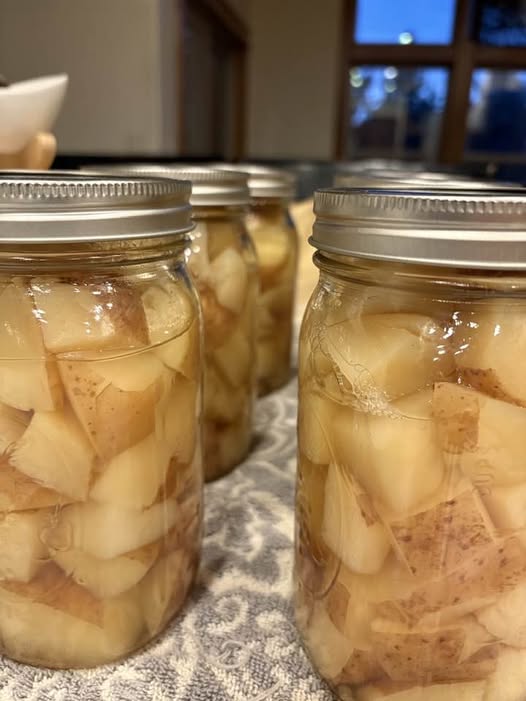
Canned Diced Potatoes
- Prep Time: 30 minutes
- Peeling & Dicing: 20 minutes
- Boiling Potatoes: 10 minutes
- Jar Preparation: 10 minutes
- Pressure Canning Time:
- Pint Jars: 35 minutes
- Quart Jars: 40 minutes
- Pressure Build & Cool Down: 45–60 minutes
- Total Time: Approximately 2½–3 hours
Yield
- About 7 quart jars or 14 pint jars
Ingredients
- 20 pounds potatoes (Yukon Gold, White, or Red potatoes)
- Clean water
- Canning salt (optional)
- 1 teaspoon per quart jar
- ½ teaspoon per pint jar
Equipment Needed
- Pressure canner
- Mason jars
- Two-piece canning lids
- Jar lifter
- Bubble remover
- Funnel
- Large stockpot
- Sharp knife
- Vegetable peeler
- Clean towels
- Cutting board
Best Potatoes for Canning
Choose waxy or all-purpose potatoes because they hold their shape well after processing.
Good choices include:
- Yukon Gold
- Red potatoes
- White potatoes
Avoid russet potatoes if possible, as they tend to become softer during canning.
Step 1: Prepare the Potatoes
Wash the potatoes thoroughly under cool running water.
Peel each potato to remove the skin.
Cut away bruises, green spots, sprouts, or damaged areas.
Dice the potatoes into approximately 1-inch cubes for even cooking.
Immediately place diced potatoes into a bowl of cold water to prevent browning while you finish preparing the remaining potatoes.
Step 2: Preheat the Jars
Wash jars with hot soapy water.
Rinse thoroughly.
Keep jars hot until ready to fill.
Prepare lids according to the manufacturer’s directions.
Step 3: Boil the Potatoes
Bring a large pot of fresh water to a rolling boil.
Drain the potatoes from the soaking water.
Add potatoes to boiling water.
Boil for 2 minutes.
This brief cooking step helps remove excess starch and improves the quality of the finished product.
Do not fully cook the potatoes.
Step 4: Fill the Jars
Using a slotted spoon, fill each hot jar with hot potato cubes.
Leave 1 inch of headspace.
If desired, add:
- ½ teaspoon canning salt to pint jars
- 1 teaspoon canning salt to quart jars
The salt is optional and is used only for flavor.
Cover the potatoes with fresh boiling water while maintaining 1 inch headspace.
Remove trapped air bubbles using a bubble remover or plastic utensil.
Adjust headspace if necessary.
Wipe jar rims with a clean damp cloth.
Apply lids and screw bands until fingertip tight.
Step 5: Prepare the Pressure Canner
Place the filled jars into the pressure canner.
Add the amount of water recommended by your canner manufacturer, usually about 2–3 inches.
Lock the lid securely.
Leave the vent open.
Heat the canner over medium-high heat until steam flows steadily.
Allow steam to vent continuously for 10 minutes.
After venting, place the pressure regulator on the vent.
Step 6: Process the Jars
Process according to your altitude and canner type.
Dial Gauge Pressure
- 0–2,000 feet: 11 PSI
- 2,001–4,000 feet: 12 PSI
- 4,001–6,000 feet: 13 PSI
- 6,001–8,000 feet: 14 PSI
Weighted Gauge Pressure
- 0–1,000 feet: 10 PSI
- Above 1,000 feet: 15 PSI
Processing Times
- Pint jars: 35 minutes
- Quart jars: 40 minutes
Maintain the correct pressure throughout the entire processing time.
Step 7: Cool the Canner
When processing is complete:
Turn off the heat.
Allow the canner to cool naturally.
Do not force cool.
Wait until the pressure reaches zero.
Remove the regulator.
Wait another 10 minutes before opening the lid.
Open the lid away from your face to avoid steam burns.
Step 8: Cool the Jars
Using a jar lifter, remove jars carefully.
Place them on a towel-lined counter.
Leave at least one inch between jars.
Allow jars to cool undisturbed for 12–24 hours.
Do not tighten bands during cooling.
Step 9: Check the Seals
After cooling:
Press the center of each lid.
Properly sealed lids should not flex.
Remove screw bands.
Wash jars if necessary.
Label each jar with the date.
Store in a cool, dark place.
Storage Tips
Store jars between 50°F and 70°F (10°C–21°C).
Avoid direct sunlight.
Use within 12–18 months for the best quality, although properly sealed jars may remain safe longer if stored correctly.
Serving Ideas
Homemade canned diced potatoes are incredibly versatile.
Use them in:
- Potato soup
- Beef stew
- Chicken soup
- Breakfast hash
- Fried potatoes
- Potato salad
- Casseroles
- Shepherd’s pie
- Corn chowder
- Vegetable soup
- Skillet meals
- Camping recipes
Recipe Tips
- Always use freshly harvested potatoes when possible.
- Keep potato cubes uniform for even heating.
- Never mash potatoes before canning.
- Do not add butter, milk, flour, or cream before canning.
- Avoid overfilling jars.
- Maintain the correct pressure throughout processing.
- Always use a pressure canner for potatoes.
Safety Notes
Potatoes are a low-acid food, meaning they must be pressure canned to destroy harmful bacteria such as Clostridium botulinum. Water-bath canning is not safe for plain potatoes. Always follow current, research-based canning guidelines, inspect jars before use, and discard any jar with an unsealed lid, unusual odor, mold, discoloration, or signs of spoilage.
Variations
Although plain potatoes are recommended for the safest preservation, you can season them after opening the jar with:
- Garlic powder
- Onion powder
- Black pepper
- Parsley
- Rosemary
- Thyme
- Paprika
- Butter
- Olive oil
- Parmesan cheese
Add these ingredients only when preparing the potatoes for serving.
Frequently Asked Questions
Can I leave the skins on?
Yes, but peeled potatoes generally produce a cleaner appearance and more consistent texture.
Why blanch the potatoes?
Blanching removes excess starch, helps maintain texture, and improves the clarity of the canning liquid.
Can I use sea salt?
For best results, use canning or pickling salt. Table salt may cloud the liquid due to additives.
Why did my potatoes float?
Some floating is normal and often resolves after the jars have rested for several days.
Can I can mashed potatoes?
No. Mashed potatoes are too dense for safe home canning and should be frozen instead.
Nutrition Information (Approximate Per 1 Cup Serving)
- Calories: 135
- Protein: 3 g
- Fat: 0 g
- Carbohydrates: 31 g
- Fiber: 3 g
- Sugars: 1 g
- Sodium: 10 mg (without added salt)
- Potassium: 620 mg
- Vitamin C: 18 mg
- Vitamin B6: 0.3 mg
- Iron: 1 mg
- Calcium: 18 mg