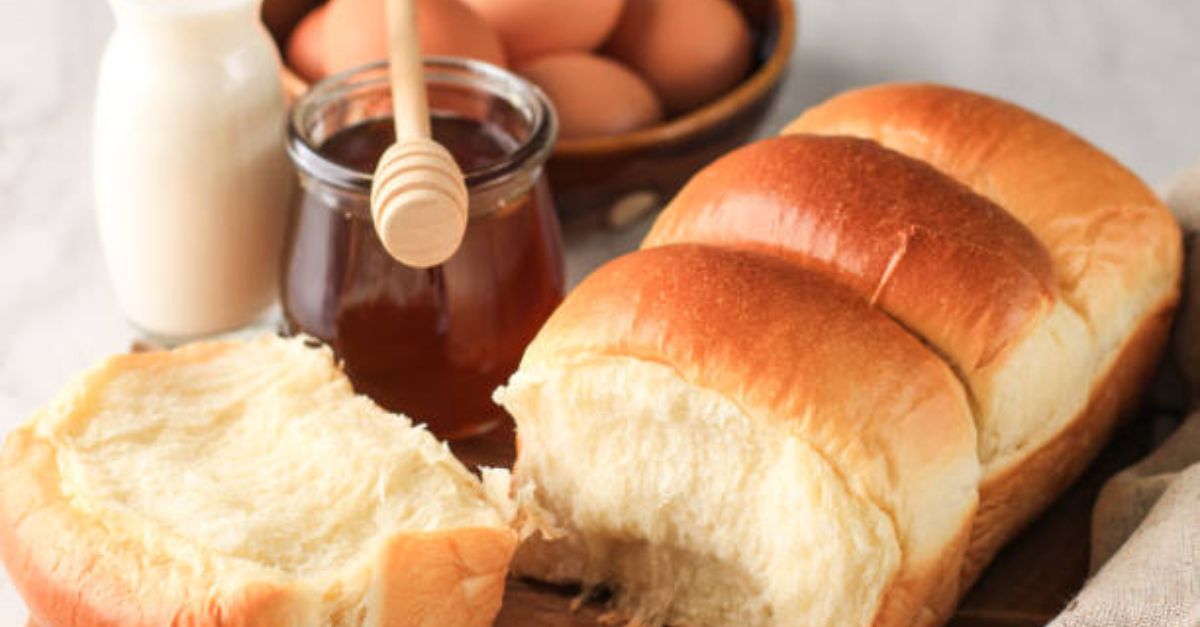
Cloud Soft Japanese Milk Bread
Prep Time: 30 minutes
Tangzhong (Roux) Cooling Time: 20 minutes
First Rise: 60–90 minutes (at 75–80°F / 24–27°C)
Second Rise: 45–60 minutes
Bake Time: 30–35 minutes
Total Time: ~3 hours 15 minutes
Intensity Level: Moderate (3/5)
Why moderate? The tangzhong method requires brief stovetop attention, and the dough is stickier than standard bread dough. However, the recipe is very forgiving and doesn’t require a sourdough starter or complex folding.
Why This Recipe Works
Japanese milk bread gets its legendary cloud-soft crumb and subtle sweetness from a simple roux called tangzhong. By pre-cooking a small amount of flour and liquid, the starch gelatinizes and traps more water. The result? A loaf that stays fresh for 4 days, tears into pillowy shreds, and toasts into buttery perfection.
This is not a crusty artisan loaf. This is the bread for fluffy sandwiches, French toast, or simply eating warm slices with salted butter.
Ingredients
For the Tangzhong (Roux)
-
20g (2 tbsp) bread flour
-
100g (100ml) whole milk or water (milk gives richer flavor)
For the Dough
-
300g (2.5 cups) bread flour (plus extra for dusting)
-
30g (2.5 tbsp) granulated sugar
-
5g (1 tsp) fine sea salt
-
7g (2 tsp) instant dry yeast (or active dry yeast)
-
120g (1/2 cup) whole milk, lukewarm (about 100°F/38°C)
-
1 large egg, room temperature
-
All of the tangzhang (cooled)
-
40g (3 tbsp) unsalted butter, softened and cubed
For Brushing (optional)
-
1 tbsp milk or 1 beaten egg yolk + 1 tsp water
Equipment Needed
-
Small saucepan
-
Digital kitchen scale (highly recommended)
-
Stand mixer with dough hook (or large bowl + wooden spoon)
-
8.5×4.5-inch loaf pan
-
Bench scraper
-
Pastry brush
-
Instant-read thermometer (optional)
Instructions
1. Make the Tangzhong (5 minutes cooking + 20 minutes cooling)
In a small saucepan, whisk the tangzhong flour and milk together until no lumps remain.
Place over medium-low heat, stirring constantly with a rubber spatula. Within 1–2 minutes, the mixture will thicken into a smooth, glue-like paste. Once lines from your spatula remain visible, remove from heat.
Scrape into a small bowl, press plastic wrap directly onto the surface (to prevent a skin), and cool to room temperature (about 20 minutes).
2. Mix the Dough (10–12 minutes by machine)
In your stand mixer bowl, combine bread flour, sugar, salt, and instant yeast. Whisk briefly.
Add the lukewarm milk, room-temp egg, and all of the cooled tangzhong.
Mix on low speed (KitchenAid speed 2) for 2 minutes, just until a shaggy dough forms.
Increase to medium speed (speed 4) and mix for 5 minutes. The dough will begin to smooth out but will still be sticky.
If using active dry yeast: Dissolve it in the lukewarm milk with 1 tsp of the sugar and let sit 10 minutes until foamy. Then proceed.
3. Incorporate the Butter (6–8 minutes)
With the mixer running on low, add the softened butter cubes one at a time, waiting until each is almost incorporated before adding the next.
Increase to medium speed and knead for 6–8 more minutes. The dough will transform: it will become glossy, silky, and pull away from the sides of the bowl. Perform the windowpane test – stretch a small piece gently. If it forms a thin, translucent membrane without tearing, you’re done.
4. First Rise (60–90 minutes)
Lightly oil a large bowl. Place the dough inside, turning once to coat. Cover with plastic wrap or a damp tea towel.
Let rise in a warm, draft-free spot until doubled in volume. At 75°F (24°C), this takes about 75 minutes.
5. Shape the Loaf (10 minutes)
Gently deflate the dough by pressing down with your fingers. Turn it onto a lightly floured surface.
Divide into 3 equal pieces (about 190g each). Roll each piece into a smooth ball. Cover and rest 10 minutes.
First shaping: Roll one ball into a 6-inch oval. Fold the top third down and the bottom third up (like a letter). Roll gently into a tight 5-inch log. Repeat with remaining pieces.
Second shaping (optional but recommended): Roll each log into a 10-inch rope, then flatten and re-roll into a tight swirl. This creates the classic fine shred.
6. Second Rise in Pan (45–60 minutes)
Place the three logs, seam-side down, into your greased loaf pan. Cover loosely with plastic wrap.
Let rise until the dough crowns about 1 inch above the rim of the pan. This is the critical “cloud” moment.
7. Preheat & Bake (30–35 minutes)
Near the end of the second rise, preheat your oven to 350°F (175°C).
Gently brush the top with milk or egg wash.
Bake on the middle rack for 30–35 minutes. If the top browns too quickly (after 20 minutes), tent loosely with foil.
The bread is done when the internal temperature reaches 190–200°F (88–93°C) and the loaf sounds hollow when tapped.
8. Cool Like a Pro
Remove the bread from the pan immediately and transfer to a wire rack.
Cool for at least 1 hour before slicing. Slicing warm bread compresses the tender crumb.
Intensity & Timing Breakdown
| Task | Time | Intensity Level |
|---|---|---|
| Making tangzhong + cooling | 25 min | Low (active stirring for 2 min) |
| Mixing & kneading | 15 min | Medium (stand mixer does the work) |
| First rise | 60–90 min | None (waiting) |
| Shaping | 10 min | Medium (requires gentle handling) |
| Second rise | 45–60 min | None (waiting) |
| Baking | 30–35 min | Low (ovens only) |
| Total active time | ~50 minutes | |
Nutrition Information (Per Slice, 12 slices per loaf)
Calculated using tangzhong with whole milk and 40g unsalted butter.
| Nutrient | Amount |
|---|---|
| Calories | 210 kcal |
| Protein | 6.5 g |
| Total Fat | 6 g |
| – Saturated Fat | 3.5 g |
| Cholesterol | 30 mg |
| Carbohydrates | 32 g |
| – Fiber | 1 g |
| – Sugar | 5 g |
| Sodium | 210 mg |
| Calcium | 40 mg |
| Iron | 1.8 mg |
Note: Nutrition is an estimate. Using water in tangzhong reduces calories by ~15 kcal per slice.
Pro Tips for Cloud-Level Softness
-
Weigh your flour. Using cups can add 20% more flour, resulting in dense bread.
-
Don’t rush the tangzhong cooling. Warm roux kills yeast and creates a gummy crumb.
-
Room temp ingredients matter. Cold milk or egg stiffens the butter, leading to longer kneading.
-
The dough will be sticky before the butter is fully incorporated. Resist adding extra flour.
-
For a shiny top crust, brush with egg yolk + water. For a matte, soft crust, brush with milk.
Storage & Freezing
Room temperature: Store in an airtight container or bread box for up to 4 days. Do not refrigerate (starch recrystallizes and stales faster).
Freezer: Wrap tightly in plastic wrap, then foil. Freeze for up to 3 months. Thaw overnight at room temperature.
To refresh: Warm slices in a 300°F oven for 4 minutes or in a toaster on the lowest setting.
Final Note from the Kitchen
This Cloud Soft Japanese Milk Bread is the recipe that changes how you think about homemade bread. It’s not fast, but it is deeply rewarding. The first time you tear open a slice and see the delicate, feathery shreds, you’ll understand why bakers call it “Hokkaido milk bread.” Make it once for sandwiches. Make it twice for toast with jam. Make it a third time just to watch it rise.
Last recipe updated: June 2026
Recipe copyright: [Your Website Name] – For personal use only. Do not republish without permission.