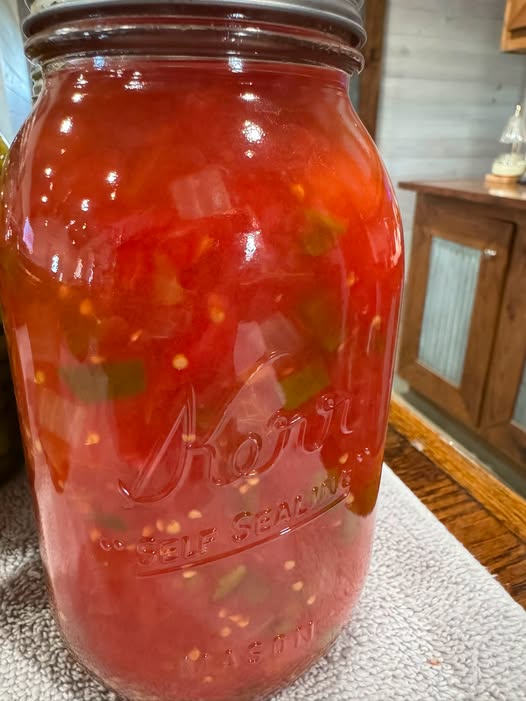
homemade salsa for canning
- Prep Time: 35 minutes
- Cook Time: 30 minutes
- Canning Process Time: 15 minutes (adjust for altitude if necessary)
- Total Time: Approximately 1 hour 20 minutes
Yield: About 7 pint jars
Ingredients
- 10 cups peeled, cored, and chopped Roma tomatoes
- 5 cups chopped onions
- 2½ cups chopped green bell peppers
- 2½ cups chopped jalapeño peppers (seeded for milder salsa if desired)
- 6 cloves garlic, minced
- 2 cups bottled lemon juice (or 5% acidity vinegar if using an approved canning recipe)
- 2 tablespoons salt
- 1 tablespoon ground cumin
- 1 tablespoon black pepper
- 2 teaspoons oregano
- 1 teaspoon paprika
- 1 teaspoon crushed red pepper flakes (optional)
- ¼ cup chopped fresh cilantro (optional; add just before serving rather than canning if preferred)
Equipment Needed
- Large stockpot
- Water bath canner
- Pint-size mason jars
- New canning lids and bands
- Jar lifter
- Funnel
- Bubble remover
- Ladle
- Clean kitchen towels
Step 1: Prepare the Tomatoes
Bring a large pot of water to a boil.
Cut a small “X” on the bottom of each tomato. Carefully lower the tomatoes into boiling water for 30–60 seconds.
Transfer immediately into ice water.
Once cooled, peel away the skins, remove the cores, and chop the tomatoes.
Measure exactly 10 cups.
Step 2: Prepare the Vegetables
Dice the onions and bell peppers into small, even pieces.
Wear gloves while handling jalapeños.
Remove seeds if you prefer a mild salsa.
Finely mince the garlic.
Keeping the vegetables evenly chopped helps produce a consistent texture throughout the salsa.
Step 3: Combine Ingredients
In a large stainless-steel stockpot combine:
- Tomatoes
- Onion
- Bell peppers
- Jalapeños
- Garlic
- Lemon juice
- Salt
- Cumin
- Oregano
- Black pepper
- Paprika
- Red pepper flakes
Stir everything thoroughly.
Step 4: Simmer the Salsa
Bring the mixture to a gentle boil over medium-high heat (approximately 375°F / 190°C stovetop equivalent).
Once boiling, reduce to medium-low heat.
Allow the salsa to simmer for 30 minutes, stirring every 5 minutes to prevent sticking.
The salsa should thicken slightly while maintaining a spoonable consistency.
Avoid overcooking, which may result in a paste-like texture.
Step 5: Prepare the Jars
While the salsa cooks, wash jars in hot soapy water.
Keep jars hot until ready to fill.
Prepare lids according to the manufacturer’s instructions.
Fill the water bath canner halfway with water and begin heating.
Step 6: Fill the Jars
Using a funnel, ladle the hot salsa into each hot jar.
Leave ½-inch headspace.
Remove trapped air bubbles using a bubble remover.
Wipe the jar rims with a damp cloth.
Place lids on jars and screw bands on until fingertip tight.
Step 7: Water Bath Process
Place jars into the boiling water canner.
Ensure water covers jars by at least one inch.
Bring to a full rolling boil.
Process pint jars for:
- 15 minutes (0–1,000 feet elevation)
- Adjust processing time according to your local altitude following safe home canning guidelines.
Once processing is complete, turn off the heat.
Allow jars to rest in the canner for 5 minutes.
Remove jars carefully using a jar lifter.
Place them on a towel-lined counter.
Do not tighten bands or disturb jars while cooling.
Allow jars to cool undisturbed for 12–24 hours.
Step 8: Check the Seals
After cooling:
- Remove the screw bands.
- Press the center of each lid.
- Properly sealed lids should not flex up and down.
- Refrigerate any unsealed jars and use within one week.
Label jars with the preparation date.
Store sealed jars in a cool, dark pantry.
Serving Suggestions
Homemade canned salsa pairs beautifully with:
- Tortilla chips
- Tacos
- Burritos
- Quesadillas
- Nachos
- Scrambled eggs
- Grilled chicken
- Steak
- Fish tacos
- Rice bowls
- Baked potatoes
- Mexican casseroles
Storage Tips
Properly sealed jars can be stored in a cool, dry place for up to 12 months.
Once opened, refrigerate immediately and enjoy within 7–10 days.
Never consume salsa from jars with bulging lids, leaking seals, unusual odors, or visible mold.
Tips for Success
- Use paste tomatoes such as Roma for a thicker salsa.
- Always measure ingredients accurately when canning.
- Use bottled lemon juice for consistent acidity.
- Do not reduce the amount of acid in the recipe.
- Stir frequently during simmering.
- Keep jars hot before filling to prevent thermal shock.
- Avoid thickening the salsa with cornstarch or flour before canning.
- For a smoother salsa, pulse the cooked mixture briefly with an immersion blender before filling jars.
- Customize the heat level by adjusting the type of peppers, but do not increase the total amount of low-acid vegetables beyond the recipe proportions.
Recipe Variations
Roasted Salsa
Roast the tomatoes, peppers, onions, and garlic before chopping for a rich, smoky flavor.
Mild Salsa
Replace jalapeños with additional bell peppers while keeping the overall vegetable proportions balanced.
Smoky Salsa
Add a small amount of smoked paprika for extra depth.
Chunky Salsa
Leave the vegetables in larger pieces and simmer slightly less to maintain texture.
Frequently Asked Questions
Can I use fresh lemon juice?
For canning safety, bottled lemon juice is recommended because it has standardized acidity.
Can I freeze this salsa instead?
Yes. If you prefer not to can it, cool the salsa completely and freeze it in freezer-safe containers for up to 6 months.
Why is my salsa watery?
Fresh tomatoes naturally release liquid during cooking. Using Roma tomatoes and simmering long enough helps reduce excess moisture.
Can I make it hotter?
You may substitute hotter pepper varieties in place of jalapeños, but avoid increasing the total quantity of peppers beyond the tested proportions.
Nutrition Information
Per Serving (approximately ¼ cup)
- Calories: 25
- Protein: 1 g
- Carbohydrates: 6 g
- Dietary Fiber: 1 g
- Sugars: 4 g
- Fat: 0 g
- Saturated Fat: 0 g
- Cholesterol: 0 mg
- Sodium: 180 mg
- Potassium: 220 mg
- Vitamin A: 8% DV
- Vitamin C: 30% DV
- Calcium: 2% DV
- Iron: 2% DV