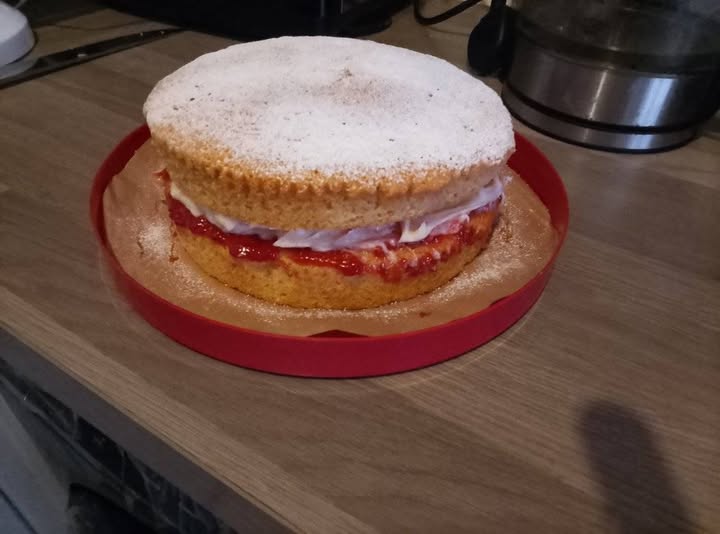
Sponge cake
Light, Airy, and Perfect for Any Occasion
The sponge cake is one of the most fundamental and versatile cakes in the world of baking. With its soft, fluffy texture and subtly sweet flavor, this cake serves as a perfect base for everything from layered birthday cakes and trifles to strawberry shortcakes and Swiss rolls.
Whether you’re a beginner baker or a seasoned pastry pro, mastering the sponge cake opens up a world of dessert possibilities.
Prep & Baking Time
-
Preparation Time: 25 minutes
-
Baking Time: 25–30 minutes
-
Cooling Time: 30–60 minutes
-
Total Time: About 1.5–2 hours
Difficulty Level
-
Skill Level: Beginner to Intermediate
This recipe uses a traditional method (whipping eggs and sugar) and doesn’t rely on chemical leaveners like baking powder. It requires care and precision, but with some attention to detail, it’s quite achievable—even for new bakers.
Ingredients
For a 2-layer 8-inch (20 cm) sponge cake:
-
4 large eggs, at room temperature
-
200g (1 cup) granulated sugar
-
200g (1 1/3 cups) plain/all-purpose flour, sifted
-
1 tsp vanilla extract
-
60ml (1/4 cup) whole milk, warmed
-
60g (1/4 cup) unsalted butter, melted and cooled
-
1/4 tsp salt (optional)
Equipment Needed
-
Stand mixer or electric hand mixer
-
Mixing bowls
-
Sifter
-
Spatula
-
2 x 8-inch round cake pans
-
Parchment paper
-
Cooling rack
Instructions
Step 1: Preheat and Prepare Pans
-
Preheat your oven to 175°C (350°F).
-
Grease two 8-inch round cake pans and line the bottoms with parchment paper for easy release.
Step 2: Whip Eggs and Sugar
-
In a large mixing bowl, beat the eggs and sugar on high speed for about 8–10 minutes, until the mixture becomes pale, thick, and triples in volume.
-
The mixture should form a thick ribbon when you lift the beaters (this is called the “ribbon stage”).
Pro Tip: Use room temperature eggs for better volume and stability when whipping.
Step 3: Add Vanilla and Salt
-
Gently stir in the vanilla extract and salt, if using.
Step 4: Fold in the Flour
-
Sift the flour again over the egg mixture in 3 additions, gently folding it in with a spatula after each addition.
-
Fold slowly and carefully to avoid deflating the air you’ve beaten into the eggs.
Do not overmix! This step is critical for a light sponge texture.
Step 5: Incorporate Milk and Butter
-
In a small bowl, combine the warm milk and melted butter.
-
Add a spoonful of the batter into the butter-milk mixture to lighten it.
-
Then pour that mixture back into the main batter and fold gently until just combined.
Step 6: Bake the Cake
-
Divide the batter evenly between the two prepared pans.
-
Tap the pans gently on the counter to release large air bubbles.
-
Bake for 25–30 minutes, or until a skewer inserted into the center comes out clean.
-
The cakes should be golden brown and spring back when gently pressed.
Step 7: Cool and Release
-
Let the cakes cool in the pans for 10 minutes.
-
Run a knife around the edges and invert the cakes onto a wire rack.
-
Peel off parchment paper and allow to cool completely.
Tips for a Perfect Sponge Cake
-
Use room temperature ingredients: Cold eggs won’t whip up properly.
-
Be gentle: Fold ingredients softly to keep the batter airy.
-
Don’t open the oven early during baking—this can cause the cake to collapse.
-
Use a scale if possible: Sponge cake is delicate, and accurate measurements make a big difference.
-
Cool upside-down: To keep the sponge from collapsing, cool it upside down (if you’ve baked it in one pan).
Nutrition Facts (Per Slice, based on 12 slices)
| Nutrient | Amount |
|---|---|
| Calories | 185 kcal |
| Total Fat | 6g |
| Saturated Fat | 3.5g |
| Cholesterol | 90mg |
| Sodium | 70mg |
| Carbohydrates | 29g |
| Sugars | 17g |
| Protein | 4g |
| Fiber | <1g |
Note: Values vary based on ingredients used and any additional toppings or fillings.