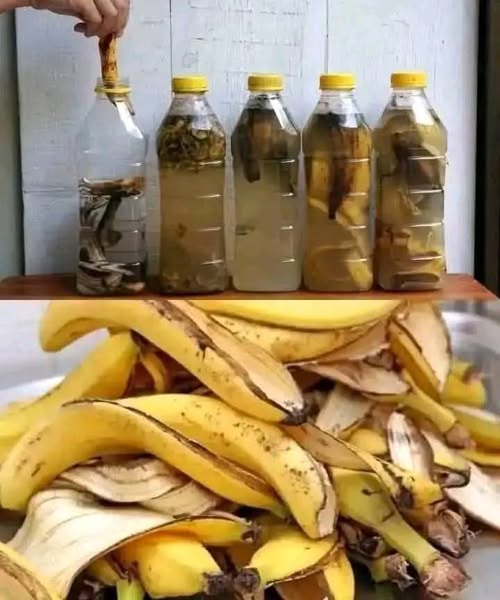
banana peel fertilizer
- Preparation Time: 10 minutes
- Soaking Time: 24–48 hours
- Application Time: 5 minutes
- Total Time: 24–48 hours
- Difficulty Level: Easy
- Yield: Approximately 1 liter (4 cups) of banana peel fertilizer liquid
- Category: DIY Garden Fertilizer
Ingredients
- 2 fresh banana peels
- 4 cups (1 liter) clean water
- 1 clean glass jar or container with lid
Optional Additions
- 1 teaspoon unsulfured molasses (optional)
- A handful of finished compost (optional)
- Rainwater instead of tap water (optional)
Equipment Needed
- Sharp knife
- Cutting board
- Glass jar or container
- Fine mesh strainer
- Measuring cup
- Watering can or spray bottle
Instructions
Step 1: Prepare the Banana Peels
Remove any fruit remaining on the banana peels.
Rinse the peels under cool water to remove surface dirt if needed.
Cut the peels into small pieces about 1–2 inches long. Smaller pieces expose more surface area and decompose more quickly.
Step 2: Fill the Container
Place the chopped banana peels into the glass jar.
Pour the water over the peels until they are completely submerged.
If using molasses or compost, add them now and stir gently.
Step 3: Soak
Cover the jar loosely with a lid.
Allow the mixture to soak at room temperature for 24 to 48 hours.
Stir once or twice during the soaking period.
The water may become lightly colored and develop a mild earthy aroma.
Step 4: Strain
After soaking, strain the liquid through a fine mesh strainer.
Discard the banana peel pieces into your compost pile or bury them directly in the garden where appropriate.
Step 5: Dilute (Optional)
For young seedlings or delicate plants, dilute the fertilizer by mixing:
- 1 part banana peel liquid
- 1 part clean water
Established outdoor plants can generally use the undiluted liquid occasionally, depending on their needs and overall fertilization program.
Step 6: Apply
Pour the fertilizer around the base of the plant rather than directly onto the leaves.
Use approximately:
- ½ cup for small potted plants
- 1 cup for medium plants
- 2 cups for larger garden plants
Apply every 2–4 weeks as a supplement to regular plant care.
Best Uses
This homemade fertilizer works well as part of an overall plant care routine for:
- Roses
- Tomatoes
- Peppers
- Herbs
- Houseplants
- Flowering annuals
- Vegetable gardens
- Berry bushes
- Fruit trees (young trees in moderation)
Helpful Tips
- Use ripe banana peels rather than spoiled or moldy peels.
- Compost the strained peels instead of throwing them away.
- Do not leave the mixture soaking for extended periods in warm weather, as it may develop unpleasant odors.
- Store unused fertilizer in the refrigerator for up to 3 days and shake before using.
- Avoid overapplying any homemade fertilizer, as plants benefit from balanced nutrition rather than excess amounts of one nutrient source.
Alternative Ways to Use Banana Peels
Compost
Chop banana peels into small pieces and add them directly to your compost pile. This is one of the most effective ways to recycle them.
Dried Banana Peel Powder
Dry banana peels completely and grind them into a powder. Mix small amounts into garden soil or compost.
Direct Soil Amendment
Bury chopped banana peels a few inches below the soil surface near established plants. As they decompose, they contribute organic matter to the soil.
Worm Bin
Banana peels are an excellent addition to a well-managed vermicomposting system, where worms help break them down into nutrient-rich castings.
Storage Instructions
Fresh banana peel fertilizer liquid is best used within 2–3 days.
Store in a sealed container in the refrigerator if not using immediately.
If the liquid develops mold, a foul odor, or unusual discoloration, discard it and prepare a fresh batch.
Frequently Asked Questions
Do banana peels provide all the nutrients plants need?
No. Banana peels contain some potassium and other nutrients, but they are not a complete fertilizer. Plants often require additional sources of nitrogen, phosphorus, and other essential nutrients depending on the soil and crop.
Can I use banana peel fertilizer every week?
Using it every 2–4 weeks is generally sufficient as a supplement. Overuse is unlikely to provide additional benefits and should not replace proper fertilization and soil management.
Which plants benefit most?
Flowering plants, vegetables, and many ornamental plants can be grown as part of a balanced gardening program that includes compost and appropriate fertilization. Responses vary depending on soil conditions and plant needs.
Can I spray the liquid on leaves?
It’s generally better to apply the liquid to the soil around the base of the plant. Foliar application is less common for this type of homemade fertilizer and may not provide the same benefit.
Approximate Nutritional Content of Banana Peels (Per Medium Peel)
While this project is not a food recipe, the primary ingredient contains approximately:
- Calories: 105 kcal (entire banana; peel itself is not typically eaten in this recipe)
- Potassium: Banana peels contain potassium, though the exact amount transferred to the soaking water varies.
- Magnesium: Present in small amounts.
- Calcium: Present in small amounts.
- Phosphorus: Present in small amounts.
- Dietary Fiber: Banana peels are rich in fiber, but the fiber remains largely in the peel rather than the soaking liquid.