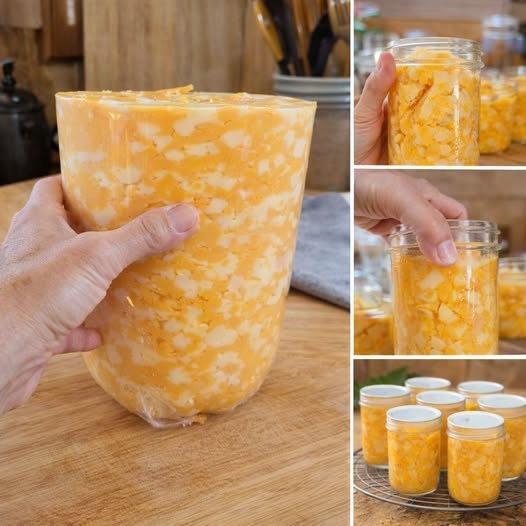
Canning Colby Cheddar Cheese
Preparation Time
20 minutes
Freezing Time
24 hours
Total Time
24 hours 20 minutes
Yield
4 pounds prepared cheese
Ingredients
- 4 pounds Colby Cheddar cheese block
- Vacuum seal bags or freezer bags
- Permanent marker
- Labels
Equipment
- Sharp cheese knife
- Cutting board
- Vacuum sealer (recommended)
- Freezer-safe storage bags
- Kitchen towels
- Disposable gloves (optional)
Step 1: Select Fresh Cheese
Choose freshly purchased Colby Cheddar cheese.
Look for:
- Firm texture
- No mold
- No cracks
- Fresh dairy aroma
Avoid cheese nearing its expiration date.
Step 2: Portion the Cheese
Cut the cheese into manageable portions.
Suggested sizes:
- 8-ounce blocks
- 1-pound blocks
- Shredded portions for recipes
Smaller portions thaw faster and reduce waste.
Step 3: Wrap Properly
Wrap each block tightly with:
- Plastic wrap
- Freezer paper
- Aluminum foil (optional)
Remove as much air as possible.
Step 4: Vacuum Seal
Place wrapped cheese into vacuum seal bags.
Seal according to the manufacturer’s instructions.
Vacuum sealing greatly reduces freezer burn and helps preserve flavor.
Step 5: Label
Clearly write:
- Cheese type
- Packaging date
- Best used by date
Step 6: Freeze
Place bags flat inside the freezer.
Recommended Freezer Temperature
0°F (-18°C) or below
Freeze until completely solid.
Thawing Instructions
Transfer frozen cheese to the refrigerator.
Allow to thaw:
- Small blocks: 8–12 hours
- Large blocks: 24 hours
Avoid thawing at room temperature.
Storage Times
Refrigerator
- Unopened: 3–4 weeks
Vacuum Sealed
- 2–4 months refrigerated
Frozen
- Best quality for 6 months
- Safe for up to 12 months when continuously frozen
Serving Ideas
Colby Cheddar cheese works wonderfully in:
- Grilled cheese sandwiches
- Cheeseburgers
- Homemade macaroni and cheese
- Nachos
- Quesadillas
- Breakfast casseroles
- Cheese boards
- Omelets
- Baked potatoes
- Homemade pizza
Tips for Best Results
Use freshly purchased cheese for the longest storage life.
Avoid freezing pre-shredded cheese if possible, as anti-caking agents can affect texture.
Label every package clearly.
Store away from foods with strong odors.
Do not refreeze thawed cheese.
Common Mistakes
Trying to Pressure Can Cheese
No scientifically tested home canning process exists for cheese.
Leaving Air Inside Packages
Air causes freezer burn and shortens storage life.
Freezing Large Blocks
Large blocks take much longer to thaw and are less convenient.
Poor Labeling
Always record packaging dates.
Frequently Asked Questions
Can I pressure can Colby Cheddar cheese?
No. There are no approved home pressure-canning methods for cheese, and attempting to do so is unsafe.
Can cheese be stored in jars?
Not for shelf-stable storage at home. Refrigerated storage in airtight containers is acceptable for short-term use.
Does freezing ruin cheese?
The texture may become slightly more crumbly after thawing, but the flavor remains excellent, especially for cooking and baking.
What is the safest long-term storage method?
Vacuum sealing and freezing are the safest and most practical methods for preserving Colby Cheddar cheese at home.
Recipe Variations
Try preserving different cheeses using the same freezer-storage technique:
- Mild Cheddar
- Sharp Cheddar
- Monterey Jack
- Colby Jack
- Pepper Jack
- Mozzarella
- Swiss
- Gouda
Soft cheeses such as Brie or Camembert generally do not freeze as well because their texture changes more noticeably.
Food Safety Notes
Always inspect cheese before use.
Discard immediately if you notice:
- Mold (unless it is a naturally mold-ripened cheese)
- Sour or unpleasant odor
- Slimy texture
- Discoloration
- Damaged packaging
When in doubt, throw it out.
Time and Temperature Summary
| Step | Time | Temperature |
|---|---|---|
| Preparation | 20 minutes | Room temperature |
| Freeze | 24 hours | 0°F (-18°C) or below |
| Thaw Small Blocks | 8–12 hours | Refrigerator (40°F / 4°C or below) |
| Thaw Large Blocks | 24 hours | Refrigerator (40°F / 4°C or below) |
| Best Frozen Storage | Up to 6 months | 0°F (-18°C) or below |
Nutrition Information (Approximate, per 1-ounce/28 g serving)
- Calories: 110
- Protein: 7 g
- Total Fat: 9 g
- Saturated Fat: 5.5 g
- Carbohydrates: 1 g
- Sugars: 0 g
- Fiber: 0 g
- Cholesterol: 30 mg
- Sodium: 180 mg
- Calcium: 200 mg (about 15% DV)
- Potassium: 20 mg