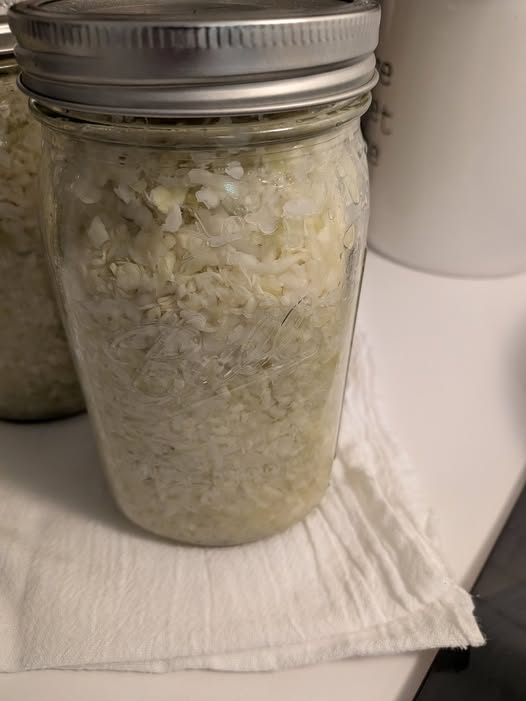
sauerkraut
Preparation Time: 20 minutes
Fermentation Time: 1–4 weeks
Total Time: 1–4 weeks
Difficulty Level: Easy
Recipe Intensity: Beginner
Ingredients
- 1 medium green cabbage (about 2 pounds / 900g)
- 1 tablespoon fine sea salt or kosher salt
Optional Flavor Additions
- 1 teaspoon caraway seeds
- 1 teaspoon fennel seeds
- 1 grated carrot
- 1 thinly sliced apple
- 1 clove garlic, minced
- 1 teaspoon juniper berries
Equipment Needed
- Large mixing bowl
- Sharp knife or mandoline
- Clean glass jar or fermentation crock
- Wooden spoon
- Fermentation weight or small clean jar
- Kitchen towel or fermentation lid
Step 1: Prepare the Cabbage
Time: 10 Minutes
Intensity: Easy
Remove any damaged outer leaves from the cabbage.
Set aside one clean outer leaf for later use.
Cut the cabbage into quarters and remove the core.
Thinly slice the cabbage using a sharp knife or mandoline.
Place the shredded cabbage into a large mixing bowl.
Step 2: Add Salt
Time: 2 Minutes
Intensity: Easy
Sprinkle the salt evenly over the cabbage.
The salt plays several important roles:
- Draws moisture from the cabbage
- Creates natural brine
- Helps beneficial bacteria thrive
- Inhibits unwanted microorganisms
Mix thoroughly.
Step 3: Massage the Cabbage
Time: 10 Minutes
Intensity: Moderate
Using clean hands, massage and squeeze the cabbage.
Continue working it for approximately 5–10 minutes.
The cabbage will gradually:
- Soften
- Release liquid
- Reduce in volume
The liquid released becomes the fermentation brine.
This step is essential for successful fermentation.
Step 4: Add Optional Seasonings
Time: 2 Minutes
Intensity: Easy
If desired, add:
- Caraway seeds
- Garlic
- Apples
- Carrots
- Other flavorings
Mix thoroughly to distribute evenly.
Traditional sauerkraut often includes caraway seeds for additional flavor.
Step 5: Pack the Jar
Time: 5 Minutes
Intensity: Easy
Transfer the cabbage into a clean glass jar or fermentation crock.
Press firmly after each handful.
The goal is to remove trapped air and bring the brine above the cabbage.
Continue packing until all cabbage is transferred.
The brine should cover the cabbage completely.
Step 6: Weigh Down the Cabbage
Time: 3 Minutes
Intensity: Easy
Place the reserved cabbage leaf on top.
Add a fermentation weight or small clean jar to keep the cabbage submerged beneath the brine.
Keeping the cabbage below the liquid is critical for safe fermentation.
Step 7: Cover and Ferment
Time: 1 Minute
Intensity: Easy
Cover the jar with:
- A fermentation lid
- Airlock lid
- Clean cloth secured with a rubber band
Place the jar in a cool, dark location.
Ideal fermentation temperature:
65–75°F (18–24°C)
Step 8: Monitor Fermentation
Time: 1–4 Weeks
Intensity: Easy
Over the next several days you may notice:
- Bubbles
- Tangy aroma
- Cloudy brine
These are signs of healthy fermentation.
Check periodically to ensure the cabbage remains submerged.
If necessary, press it down gently.
Step 9: Taste and Adjust
Time: 5 Minutes
Intensity: Easy
After approximately 7 days, begin tasting.
Fermentation time affects flavor:
- 1 week: Mild and crunchy
- 2 weeks: More tangy
- 3–4 weeks: Deep, complex flavor
Continue fermenting until the desired taste develops.
Step 10: Refrigerate
Time: 2 Minutes
Intensity: Easy
Once satisfied with the flavor, remove the weight.
Seal the jar with a regular lid.
Transfer to the refrigerator.
Cold storage slows fermentation significantly.
Tips for Success
Use Fresh Cabbage
Fresh, firm cabbage provides the best texture and flavor.
Avoid wilted or damaged heads.
Choose the Right Salt
Use:
- Sea salt
- Kosher salt
Avoid iodized table salt, which may interfere with fermentation.
Keep Everything Clean
Clean equipment helps prevent contamination.
No need for complete sterilization, but good hygiene is important.
Keep Cabbage Submerged
Vegetables exposed to air may develop mold.
Always keep the cabbage beneath the brine.
Be Patient
Flavor improves with time.
Longer fermentation generally creates a more complex taste.
Flavor Variations
Caraway Sauerkraut
Add:
- 1 teaspoon caraway seeds
Traditional German-style flavor.
Apple Sauerkraut
Add:
- 1 thinly sliced apple
Provides subtle sweetness.
Garlic Sauerkraut
Add:
- 2 cloves minced garlic
Offers a savory depth.
Spicy Sauerkraut
Add:
- Red pepper flakes
- Sliced jalapeños
Creates a pleasantly spicy version.
Serving Suggestions
Homemade sauerkraut pairs beautifully with:
- Bratwurst
- Sausages
- Hot dogs
- Reuben sandwiches
- Pork chops
- Roasted meats
- Grain bowls
- Salads
- Mashed potatoes
It can also be eaten on its own as a probiotic-rich side dish.
Storage Instructions
Refrigerator
Store refrigerated in a sealed container for up to 6 months.
Flavor will continue to evolve slowly over time.
Freezing
Not recommended.
Freezing can negatively affect texture and probiotic content.
Health Benefits of Sauerkraut
Rich in Probiotics
Natural fermentation encourages beneficial bacteria that support digestive health.
Excellent Source of Vitamin C
Cabbage naturally contains vitamin C, which remains present after fermentation.
Supports Gut Health
Fermented foods may contribute to a balanced gut microbiome.
Low in Calories
Sauerkraut is nutrient-dense while remaining relatively low in calories.
Contains Fiber
Fiber supports healthy digestion and feelings of fullness.
Nutrition Information
Per ½ Cup Serving
- Calories: 15
- Protein: 1g
- Carbohydrates: 3g
- Sugars: 1g
- Fiber: 2g
- Fat: 0g
- Saturated Fat: 0g
- Cholesterol: 0mg
- Sodium: 290mg
- Potassium: 170mg
- Calcium: 30mg
- Iron: 0.4mg
- Vitamin C: 12mg