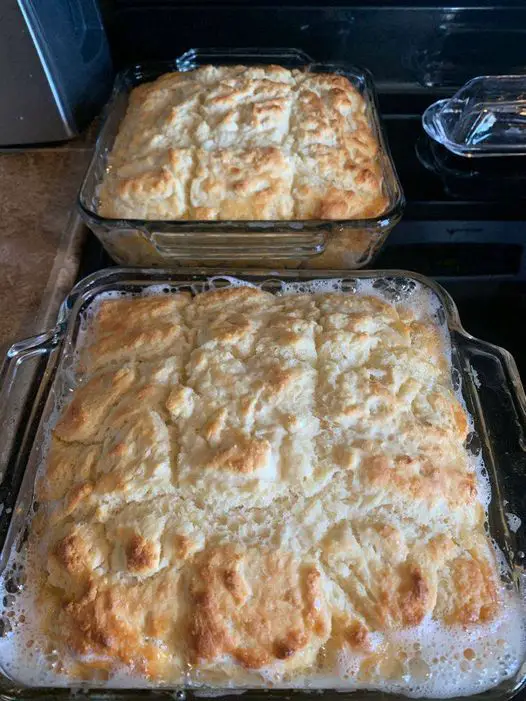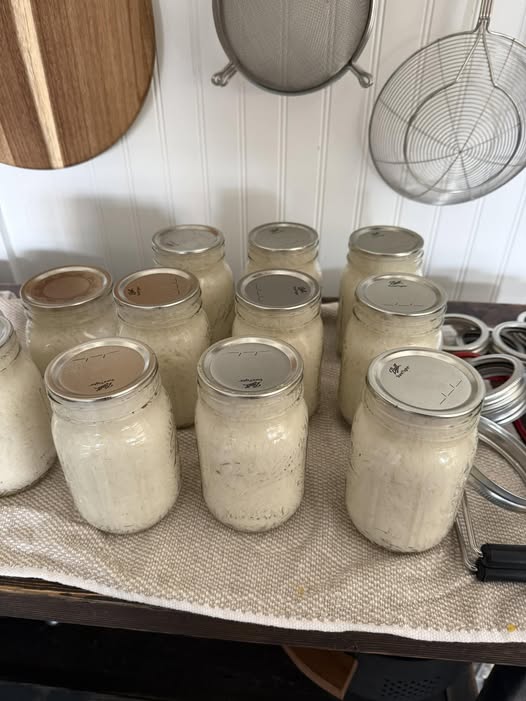
sourdough starter
- Prep Time: 10 minutes daily
- Fermentation Time: 5–7 days
- Total Time: About 1 week
- Difficulty Level: Easy
- Yield: Approximately 2 cups active sourdough starter
Ingredients
Day 1
- ½ cup (60 g) whole wheat flour or rye flour
- ¼ cup (60 ml) filtered or non-chlorinated water
Days 2–7 Feedings
- ½ cup (60 g) unbleached all-purpose flour or bread flour
- ¼ cup (60 ml) filtered or non-chlorinated water
Optional: Continue using whole wheat or rye flour for a faster, more active starter.
Equipment Needed
- 1 large glass jar (at least 1-quart capacity)
- Kitchen scale (recommended for accuracy)
- Measuring cups
- Silicone or wooden spoon
- Rubber spatula
- Loose-fitting lid or clean cloth with a rubber band
- Marker or rubber band to track starter growth
Instructions
Day 1: Mix the Starter
In a clean glass jar, combine the whole wheat flour and filtered water. Stir until no dry flour remains and the mixture resembles a thick pancake batter.
Scrape down the sides of the jar with a spatula.
Cover the jar loosely with a lid or cloth to allow airflow while preventing dust and insects from entering.
Leave the jar at room temperature, ideally 70–75°F (21–24°C), for 24 hours.
Day 2: Check for Activity
After 24 hours, you may notice a few small bubbles or a slightly tangy aroma. Some starters show little activity at this stage, which is completely normal.
Discard about half of the starter, leaving roughly ½ cup in the jar.
Add:
- ½ cup flour
- ¼ cup filtered water
Mix thoroughly until smooth, cover loosely, and leave at room temperature for another 24 hours.
Day 3: Feed Again
By the third day, you may see more bubbles and detect a mild sour aroma.
Discard half of the starter once again.
Feed with:
- ½ cup flour
- ¼ cup water
Stir well and cover loosely.
Day 4: Growing Stronger
The starter should now show more consistent bubbling and begin rising after feedings.
Repeat the discard-and-feed process.
If your kitchen is cool, fermentation may take an extra day or two.
Day 5: Observe the Rise
A healthy starter should nearly double in size within 4–8 hours after feeding.
Continue discarding half and feeding with fresh flour and water.
The aroma should be pleasantly tangy, similar to yogurt, apples, or mild vinegar.
Days 6–7: Ready for Baking
Continue feeding every 24 hours until the starter reliably doubles in size after each feeding.
Your sourdough starter is ready when it:
- Doubles in volume within 4–8 hours
- Has many bubbles throughout
- Smells pleasantly sour
- Passes the float test (a small spoonful floats in water, though this is optional and not always necessary)
How to Maintain Your Starter
If Baking Frequently
Feed the starter once every 24 hours and keep it at room temperature.
If Baking Occasionally
Store the starter in the refrigerator.
Feed it once each week by discarding half and adding fresh flour and water.
Before baking, remove it from the refrigerator and feed it once or twice until it becomes active.
Tips for Success
- Use filtered or dechlorinated water, as chlorine can inhibit fermentation.
- Weigh ingredients with a kitchen scale for consistent results.
- Keep the starter in a warm location away from direct sunlight.
- Use clean utensils to avoid contamination.
- Don’t worry if activity slows temporarily during the first few days; this is a normal part of the fermentation process.
- Be patient—some starters take up to 10 days to become fully active, depending on temperature and flour type.
Common Problems and Solutions
My Starter Isn’t Bubbling
Move it to a slightly warmer location and continue feeding regularly. Whole wheat or rye flour can help encourage activity.
There’s Liquid on Top
A layer of grayish liquid, often called hooch, indicates the starter is hungry. Pour it off or stir it back in, then feed the starter.
It Smells Strong
A tangy, fruity, or mildly vinegary smell is normal. If the starter develops visible mold or an unpleasant rotten odor, discard it and begin again with clean equipment.
Ways to Use Sourdough Starter
Once your starter is active, you can use it to prepare:
- Artisan sourdough bread
- Sandwich bread
- Pizza dough
- English muffins
- Pancakes
- Waffles
- Crackers
- Soft pretzels
- Cinnamon rolls
- Dinner rolls
- Biscuits
- Flatbreads
Storage
An active starter can be stored:
- At room temperature with daily feedings
- In the refrigerator with weekly feedings
Always keep the container loosely covered to allow gases to escape.
Freezing Instructions
For long-term storage, spread a thin layer of active starter onto parchment paper and allow it to dry completely.
Break the dried starter into flakes and store them in an airtight container in the freezer for up to 12 months.
To reactivate, soak the flakes in water and resume regular feedings until the culture becomes active again.
Feeding Ratio
A simple feeding ratio for routine maintenance is:
- ½ cup (60 g) starter
- ½ cup (60 g) flour
- ¼ cup (60 ml) water
Many experienced bakers also use equal weights of starter, flour, and water (a 1:1:1 ratio by weight) for consistent hydration and predictable fermentation.
Why You’ll Love This Recipe
- Made with only two ingredients
- No commercial yeast required
- Naturally fermented
- Budget-friendly
- Perfect for artisan baking
- Improves flavor and texture
- Can last for years with proper care
- Easy for beginners
- Versatile for many baked goods
- A rewarding traditional baking method
Nutritional Information (Per 1 Tablespoon Active Starter)
Approximate values:
- Calories: 15 kcal
- Protein: 0.5 g
- Carbohydrates: 3 g
- Fat: 0 g
- Saturated Fat: 0 g
- Fiber: 0.2 g
- Sugar: 0 g
- Sodium: 0 mg
- Potassium: 8 mg
- Calcium: 2 mg
- Iron: 0.2 mg