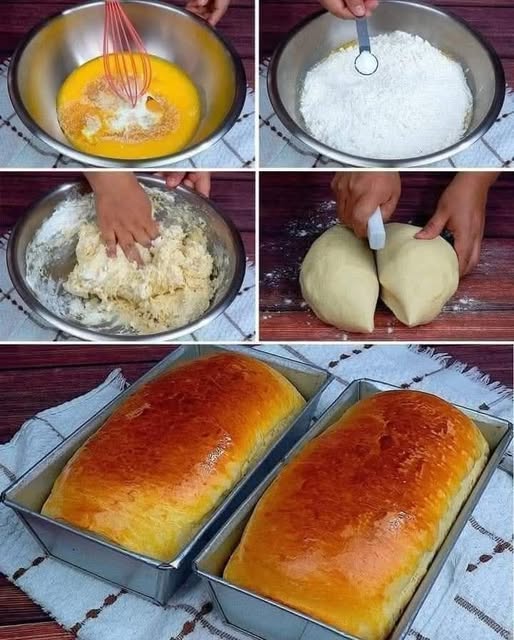
Homemade Mold Bread
- Prep Time: 20 minutes
- First Rise: 1 hour
- Second Rise: 40 minutes
- Bake Time: 30–35 minutes
- Cooling Time: 1 hour
- Total Time: Approximately 3 hours 5 minutes
- Servings: 12 slices
- Difficulty: Easy
Ingredients
- 3½ cups (420 g) bread flour
- 2¼ teaspoons (1 packet) active dry yeast
- 1¼ cups (300 ml) warm water (105–110°F / 40–43°C)
- 2 tablespoons granulated sugar
- 1½ teaspoons salt
- 2 tablespoons unsalted butter, softened
- 1 tablespoon melted butter (optional, for brushing)
Equipment Needed
- Large mixing bowl
- Measuring cups and spoons
- Wooden spoon or dough whisk
- Clean work surface
- 9×5-inch loaf pan
- Kitchen towel or plastic wrap
- Wire cooling rack
- Instant-read thermometer (optional)
Instructions
Step 1: Activate the Yeast
In a large mixing bowl, combine the warm water, sugar, and active dry yeast. Stir gently and let the mixture sit for 5–10 minutes until it becomes foamy. This indicates that the yeast is active and ready to use.
Step 2: Mix the Dough
Add the softened butter and salt to the yeast mixture. Gradually stir in the bread flour, one cup at a time, until a shaggy dough forms. The dough should be soft and slightly tacky but not overly sticky.
Step 3: Knead the Dough
Transfer the dough to a lightly floured surface. Knead for 8–10 minutes, or until the dough becomes smooth, elastic, and springs back when gently pressed. If using a stand mixer fitted with a dough hook, knead on medium speed for about 6 minutes.
Step 4: First Rise
Lightly grease a clean bowl and place the dough inside, turning it once to coat the surface. Cover with a clean kitchen towel or plastic wrap and let it rise in a warm, draft-free place for about 1 hour, or until doubled in size.
Step 5: Shape the Loaf
Punch down the risen dough to release excess air. Transfer it to a lightly floured surface and shape it into a rectangle. Roll it tightly into a loaf, pinching the seam closed. Place the dough seam-side down into a greased 9×5-inch loaf pan.
Step 6: Second Rise
Cover the loaf loosely and let it rise for 35–45 minutes, or until it has risen about 1 inch above the rim of the pan.
Step 7: Bake
Preheat your oven to 375°F (190°C).
Bake the bread for 30–35 minutes, or until the crust is deep golden brown and the loaf sounds hollow when tapped on the bottom. For the most accurate results, the internal temperature should reach 190–200°F (88–93°C).
If desired, brush the top with melted butter immediately after baking for a softer, glossy crust.
Step 8: Cool
Remove the bread from the pan and place it on a wire rack. Allow it to cool for at least 1 hour before slicing. Cooling helps the crumb set properly and prevents the bread from becoming gummy.
Tips for Success
- Use fresh yeast for the best rise.
- Measure flour accurately by spooning it into the measuring cup and leveling it off.
- Avoid adding too much flour; a slightly tacky dough produces a softer loaf.
- Let the dough rise in a warm area, around 75–80°F (24–27°C).
- Do not rush the cooling process before slicing.
Recipe Variations
Whole Wheat Bread
Replace half of the bread flour with whole wheat flour for a heartier loaf.
Herb Bread
Mix in 1 tablespoon of dried Italian herbs or rosemary for extra flavor.
Cheese Bread
Fold 1 cup of shredded cheddar or mozzarella into the dough before the first rise.
Honey Bread
Replace the sugar with 2 tablespoons of honey for a subtly sweet flavor.
Seeded Bread
Sprinkle sesame seeds, sunflower seeds, or oats over the top before baking.
Storage
Store cooled bread in an airtight container or bread bag at room temperature for up to 4 days.
Avoid refrigerating the bread, as it can dry out more quickly.
Freezing Instructions
Slice the cooled loaf and wrap it tightly in plastic wrap and aluminum foil or place it in a freezer-safe bag. Freeze for up to 3 months.
Thaw slices at room temperature or toast them directly from frozen.
Serving Suggestions
This homemade bread pairs well with:
- Butter and fruit preserves
- Peanut butter
- Avocado toast
- Scrambled eggs
- Soup and stew
- Grilled cheese sandwiches
- Deli sandwiches
- French toast
- Garlic bread
- Bread pudding
Frequently Asked Questions
Can I use all-purpose flour?
Yes. All-purpose flour works well, though bread flour creates a slightly chewier texture and higher rise.
Can I make this recipe without a stand mixer?
Absolutely. Hand kneading produces excellent results.
Why didn’t my bread rise?
Common causes include expired yeast, water that was too hot or too cold, or a room that was too cool during rising.
How do I know when it’s done?
The loaf should be golden brown, sound hollow when tapped, and register 190–200°F (88–93°C) internally.
Can I make two loaves?
Yes. Double all ingredients and divide the dough evenly between two loaf pans.
Nutrition Information (Per Slice)
- Calories: 170
- Protein: 5 g
- Carbohydrates: 31 g
- Fat: 3 g
- Saturated Fat: 1.5 g
- Cholesterol: 5 mg
- Sodium: 290 mg
- Fiber: 1 g
- Sugar: 2 g
- Calcium: 15 mg
- Iron: 2 mg
- Potassium: 60 mg