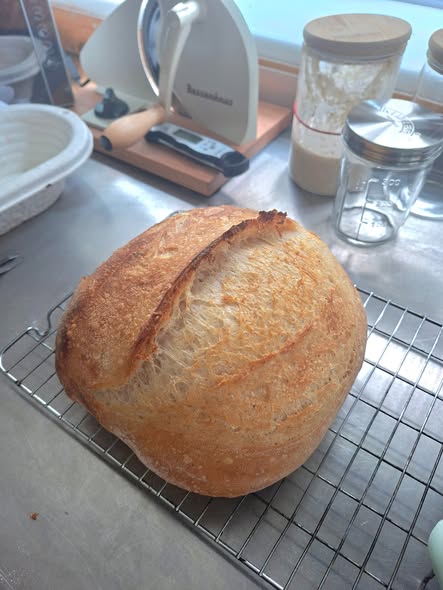
artisan sourdough bread
- Prep Time: 30 minutes
- Bulk Fermentation: 4–6 hours
- Cold Proof: 8–16 hours
- Bake Time: 45–50 minutes
- Cooling Time: 2 hours
- Total Time: Approximately 15–25 hours
- Difficulty: Intermediate
- Yield: 1 large loaf (10–12 slices)
- Cuisine: European
Ingredients
- 500 grams bread flour
- 350 grams filtered water (room temperature)
- 100 grams active sourdough starter (fed and bubbly)
- 10 grams fine sea salt
- Rice flour or all-purpose flour for dusting
Equipment
- Large mixing bowl
- Digital kitchen scale
- Dough scraper
- Banneton basket or medium bowl lined with a towel
- Dutch oven with lid
- Parchment paper
- Sharp bread lame or razor blade
- Cooling rack
Instructions
Step 1: Mix the Dough
In a large mixing bowl, combine the water and active sourdough starter, stirring until the starter is mostly dissolved.
Add the bread flour and mix until no dry flour remains. Let the dough rest for 30 minutes. This rest, called the autolyse, allows the flour to fully hydrate and helps develop gluten.
Sprinkle the salt over the dough and gently work it in by squeezing and folding the dough until evenly incorporated.
Step 2: Bulk Fermentation
Cover the bowl and let the dough ferment at room temperature for 4–6 hours, depending on the warmth of your kitchen.
During the first two hours, perform a series of stretch-and-folds every 30 minutes. To do this, gently pull one side of the dough upward and fold it over itself. Rotate the bowl and repeat on all four sides.
After the final fold, allow the dough to continue fermenting undisturbed until it has increased in volume by about 50%, feels light, and shows small bubbles throughout.
Step 3: Shape the Dough
Turn the dough onto a lightly floured work surface.
Gently shape it into a round by folding the edges toward the center. Flip the dough over and tighten the surface by pulling it toward yourself against the countertop.
Allow the dough to rest for 20 minutes.
Perform a final shaping, creating surface tension without deflating the dough.
Place the dough seam-side up into a well-floured banneton basket.
Step 4: Cold Proof
Cover the basket and refrigerate the dough for 8–16 hours.
The cold proof develops deeper flavor and makes the dough easier to score before baking.
Step 5: Preheat the Oven
Place the Dutch oven inside your oven.
Preheat to 475°F (245°C) for at least 45 minutes.
A thoroughly heated Dutch oven creates steam that helps produce a crisp crust and excellent oven spring.
Step 6: Score and Bake
Turn the dough onto a sheet of parchment paper.
Dust away excess flour if desired.
Using a sharp bread lame or razor blade, score one deep slash about ½ inch deep across the top of the loaf. Decorative scoring may also be added.
Carefully lower the dough into the hot Dutch oven.
Cover with the lid.
Bake for 25 minutes.
Remove the lid and continue baking for another 20–25 minutes, or until the crust is deep golden brown and the internal temperature reaches 205–210°F (96–99°C).
Step 7: Cool
Transfer the bread to a wire cooling rack.
Allow it to cool completely for at least 2 hours before slicing.
Cooling prevents the crumb from becoming gummy and allows the bread to finish setting.
Tips for Success
- Use an active, recently fed sourdough starter that doubles in size before baking.
- Measure ingredients with a digital kitchen scale for the most accurate results.
- Avoid adding excessive flour during shaping.
- Let the bread cool completely before cutting.
- Adjust fermentation time based on room temperature; warmer kitchens speed up fermentation.
Flavor Variations
Whole Wheat Sourdough
Replace 100 grams of bread flour with whole wheat flour for a nuttier flavor and heartier texture.
Seeded Artisan Loaf
Add ¼ cup each of sunflower seeds, pumpkin seeds, and sesame seeds during the first stretch-and-fold.
Rosemary Garlic Sourdough
Fold in 2 teaspoons chopped fresh rosemary and 2 roasted garlic cloves during bulk fermentation.
Cheese and Herb Sourdough
Incorporate 1 cup shredded sharp cheddar and 2 tablespoons chopped chives before shaping.
Olive Sourdough
Add ¾ cup chopped Kalamata olives and 1 teaspoon dried oregano for a Mediterranean-inspired loaf.
Serving Suggestions
Serve artisan sourdough bread with:
- Salted butter
- Olive oil and balsamic vinegar
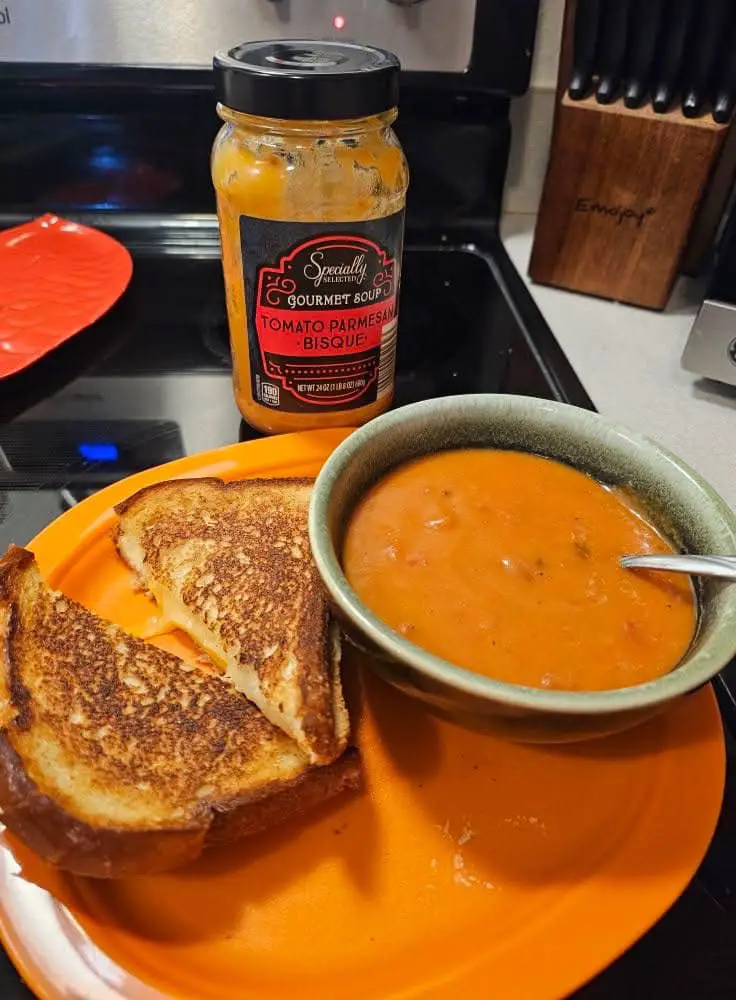
- Homemade soups
- Charcuterie boards
- Avocado toast
- Scrambled eggs
- Smoked salmon
- Grilled cheese sandwiches
- Bruschetta
- Fresh fruit preserves
Storage
Store the cooled loaf in a paper bag, bread box, or wrapped in a clean kitchen towel at room temperature for up to 3 days.
Avoid refrigerating the bread, as it can dry out more quickly.
Freezing Instructions
Slice the cooled bread before freezing for convenience.
Wrap tightly in plastic wrap and aluminum foil, or place in a freezer-safe bag.
Freeze for up to 3 months.
Thaw slices at room temperature or toast directly from frozen.
Why You’ll Love This Recipe
- Crisp, bakery-style crust
- Soft and chewy crumb
- Rich, naturally fermented flavor
- No commercial yeast required
- Perfect for sandwiches and toast
- Long-lasting freshness
- Customizable with herbs, cheese, or seeds
- Beautiful rustic appearance
- Great baking project for home bakers
- Made with simple pantry ingredients
Common Mistakes to Avoid
- Using an inactive or weak sourdough starter.
- Skipping the stretch-and-fold process, which builds gluten strength.
- Under-fermenting or over-fermenting the dough.
- Cutting into the loaf while it’s still hot.
- Baking in an insufficiently preheated Dutch oven.
Frequently Asked Questions
Can I use all-purpose flour instead of bread flour?
Yes. Bread flour provides a chewier texture and stronger gluten development, but all-purpose flour can be substituted if needed.
How do I know my starter is ready?
A healthy starter should double in size within 4–8 hours after feeding and have a bubbly, airy texture.
Can I skip the overnight proof?
Yes, but an overnight cold proof develops more complex flavor and makes the dough easier to handle.
Why didn’t my bread rise?
Common reasons include an inactive starter, under-fermentation, over-proofing, or insufficient gluten development.
How do I get a crisp crust?
Bake in a thoroughly preheated Dutch oven and allow the loaf to cool completely before storing.
Nutritional Information (Per Serving)
Approximate values based on 12 servings.
- Calories: 175
- Protein: 6g
- Carbohydrates: 36g
- Dietary Fiber: 1g
- Sugars: 0g
- Fat: 1g
- Saturated Fat: 0g
- Cholesterol: 0mg
- Sodium: 195mg
- Potassium: 60mg
- Calcium: 8mg
- Iron: 2mg